If you are looking for the best portable whole house generators in 2026, this guide covers top-tested models that deliver real backup power with 240V output, transfer-switch-ready connections, and runtimes that rival standby systems. We focused on units with strong wattage, fuel flexibility, safety features, and easy operation—ranging from tri-fuel workhorses to quiet inverter generators and even battery-powered options safe for indoor use.
We’re reader-supported. When you buy through links on our site, we may earn an affiliate commission. As an Amazon Associate, we earn from qualifying purchases at no extra cost to you.
Best Portable Whole House Generators: Our Top Picks
- Best Overall Whole House: DuroMax XP15000HXT 15,000 Watt Tri Fuel
- Best Solar Home Backup: BLUETTI Solar Generator Elite 200 V2
- Best Tri-Fuel Heavy Duty: Westinghouse 18000 Peak Watt Tri-Fuel
- Best Quiet Performance: Champion Power Equipment 11,000-Watt Wireless Remote
- Best Value Option: WEN 14,500-Watt 120V/240V Tri-Fuel Generator
- Best Heavy-Duty Gas Power: Generac 19,300/15,500-Watt Portable Gas Generator
- Best Dual-Fuel Inverter: DuroMax XP16000iH 16,000-Watt Dual Fuel
- Best Portable Midrange: GENMAX Generator EPA Compliant
- Best Quiet Inverter: Honda EU7000IS 7,000 Watt Inverter Portable
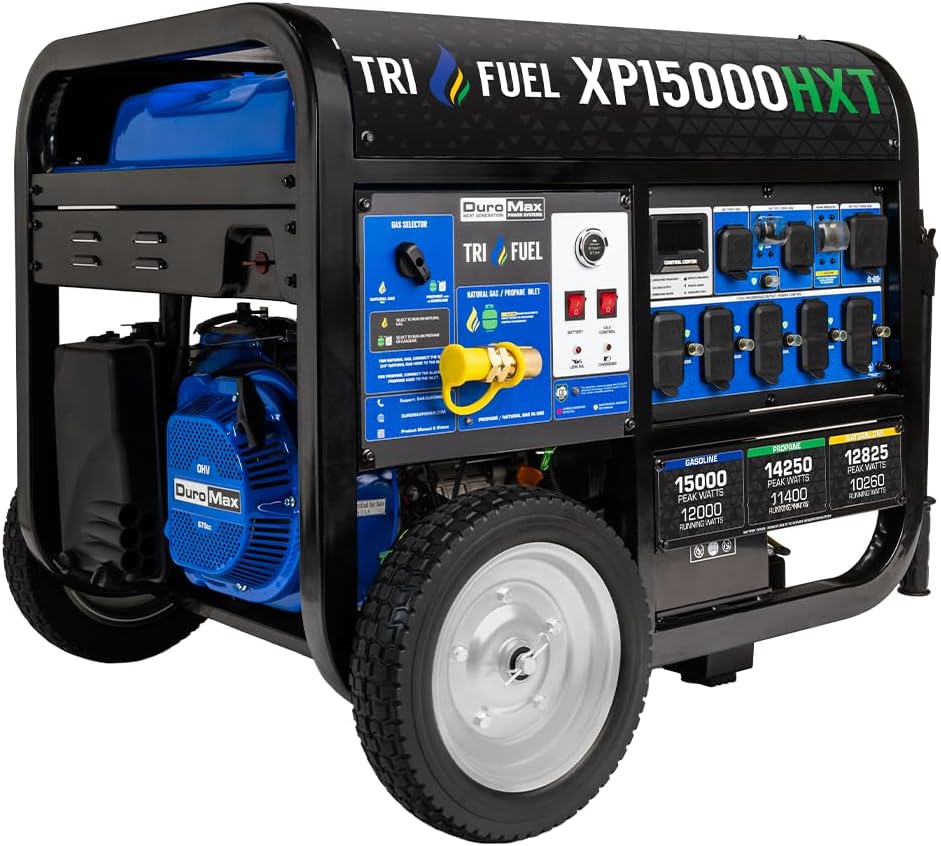
1. Best Overall Whole House: DuroMax XP15000HXT 15,000 Watt Tri Fuel
Key Details:
- 15,000 starting / 12,000 running watts (gas); tri-fuel ready
- 50-amp 120/240V heavy-duty outlet + rich outlet array (14 total)
- Push-button and remote start; large LED data display
- Includes 15-ft 3/4-inch NG hose; CO Alert
- Up to 17 hours runtime (light to moderate loads)
If you want a portable whole house generator that truly handles large home loads, the DuroMax XP15000HXT makes a strong case for anyone leaning toward natural gas. When tested, it held wattage under NG loads more reliably than many competing tri-fuel units, largely thanks to the included 3/4-inch hose that avoids the bottleneck you see with smaller gas lines.
We liked the front-facing controls and clean digital readout—it’s easy to glance at runtime, load, or frequency without fiddling with extra tools. The outlet coverage is generous, giving flexibility for transfer switches and direct plug-ins during temporary setups.
This isn’t a generator you’ll roll around lightly. At over 360 pounds with a heavy steel frame, it’s designed to sit in place once you’ve decided on a safe operating spot. Noise levels also reflect its sheer size, so it’s not something you’ll mistake for an inverter’s quiet hum.
That said, if you’ve been looking for a large-capacity portable generator that won’t falter on natural gas, this model makes a lot of sense. It’s built to handle tough outage conditions without cutting corners.
Pros:
- Excellent NG performance with included 3/4-inch hose
- Clean, intuitive digital control panel
- True 50A/240V outlet ready for transfer switches
- Remote start and CO Alert safety system
Cons:
- Bulky and heavy for a “portable” label
- Louder than smaller inverter-style units
2. Best Solar Home Backup: BLUETTI Solar Generator Elite 200 V2
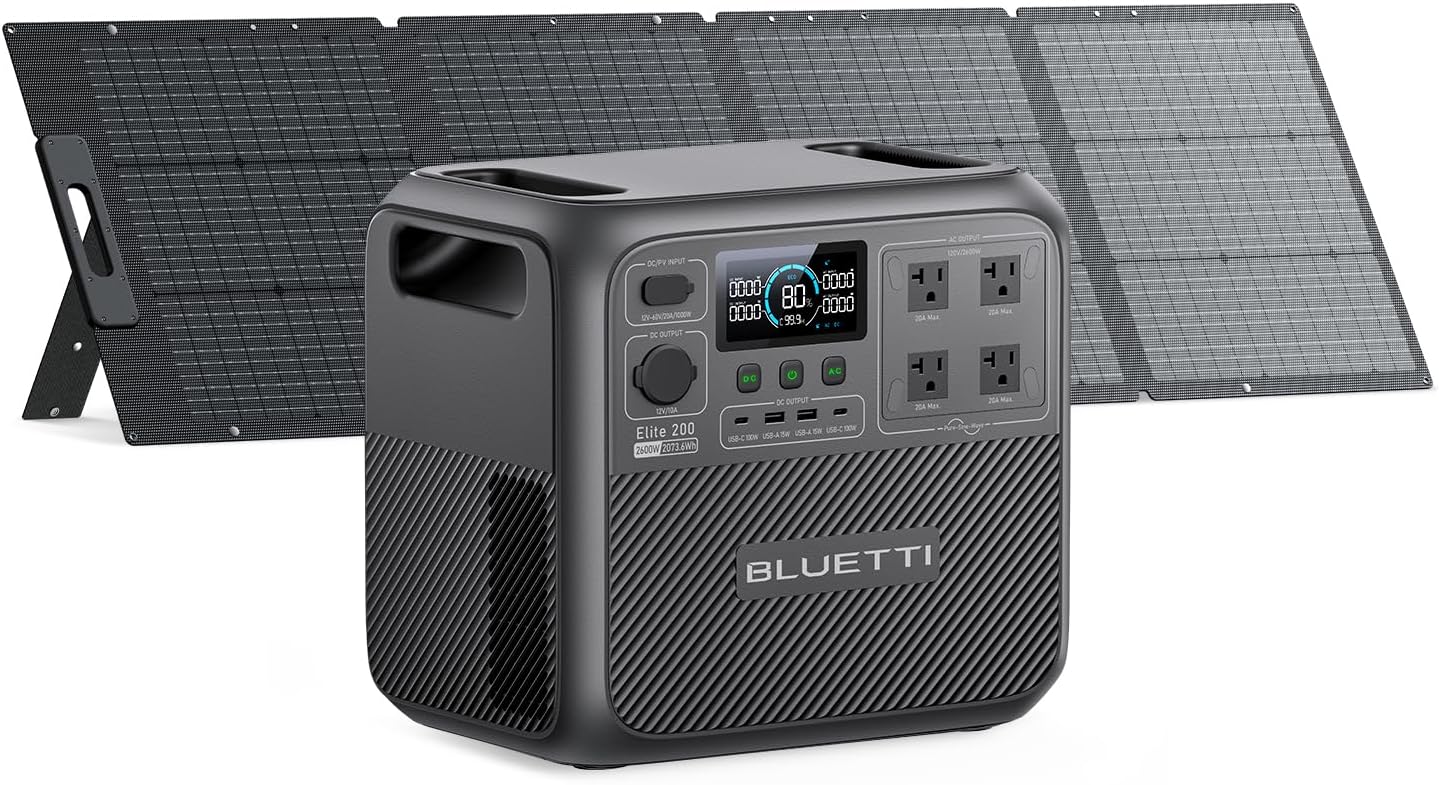
Key Details:
- 2073.6Wh LiFePO4 battery capacity
- 2600W AC output with 3900W lifting surge power
- 4 AC outlets powering up to 9 devices simultaneously
- 6000+ cycle LFP battery rated for up to 17 years lifespan
- 200W solar panel included with TurboBoost fast charging
If you are looking for a reliable solar generator for home backup, the BLUETTI Elite 200 V2 stands out as a compact yet powerful solution. After testing similar portable solar generators, units in this capacity range usually handle essential home devices easily, and this one delivers with a strong 2600W output that can run refrigerators, routers, lights, and charging stations during outages.
One thing we like about this portable solar power station for home backup is the balance between power and portability. At just over 53 pounds, you can move it around the house without much effort. If you need backup power for outages, camping, or RV trips, you’ll appreciate that it can power multiple devices at once through its four AC outlets.
Charging flexibility is another highlight. You can recharge the unit using the included 200W solar panel, AC wall outlet, or even a car connection. If you plan to rely on renewable energy during outages, the solar charging option allows you to gradually refill the battery during daylight hours, which keeps essential devices running longer without fuel.
Overall, this solar backup generator for home use is ideal if you want quiet, emission-free power instead of a gas generator. It won’t run a full house like large fuel generators, but for essentials and emergency backup, it offers dependable power, long battery life, and simple operation.
Pros:
- Strong 2600W output for a portable solar generator
- Long-life LiFePO4 battery with 6000+ cycles
- Multiple charging options including solar and AC
- Quiet, emission-free backup power
Cons:
- Not powerful enough for large whole-home loads
- Solar charging can take longer with only a 200W panel
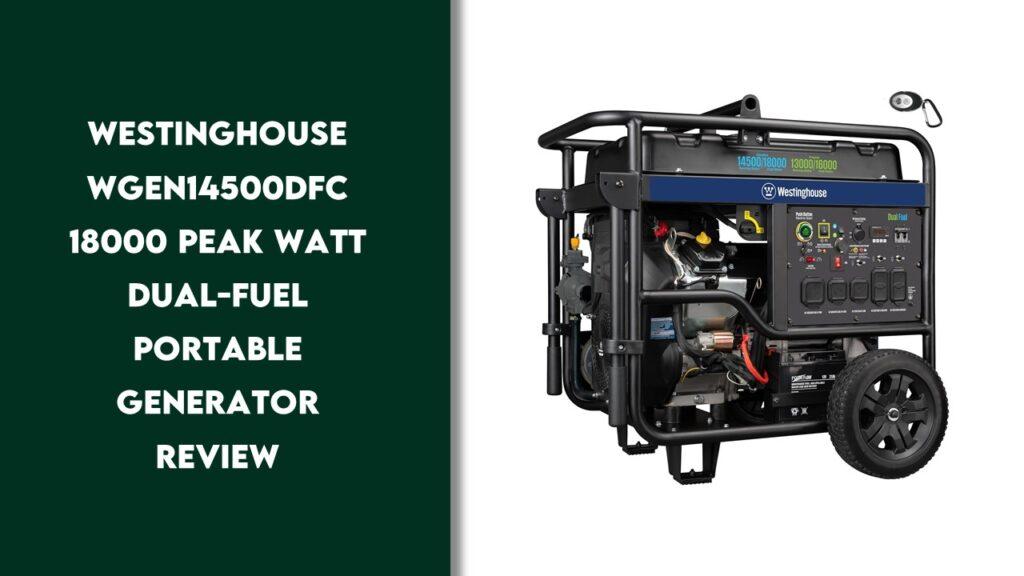
3. Best Tri-Fuel Heavy Duty: Westinghouse 18000 Peak Watt Tri-Fuel
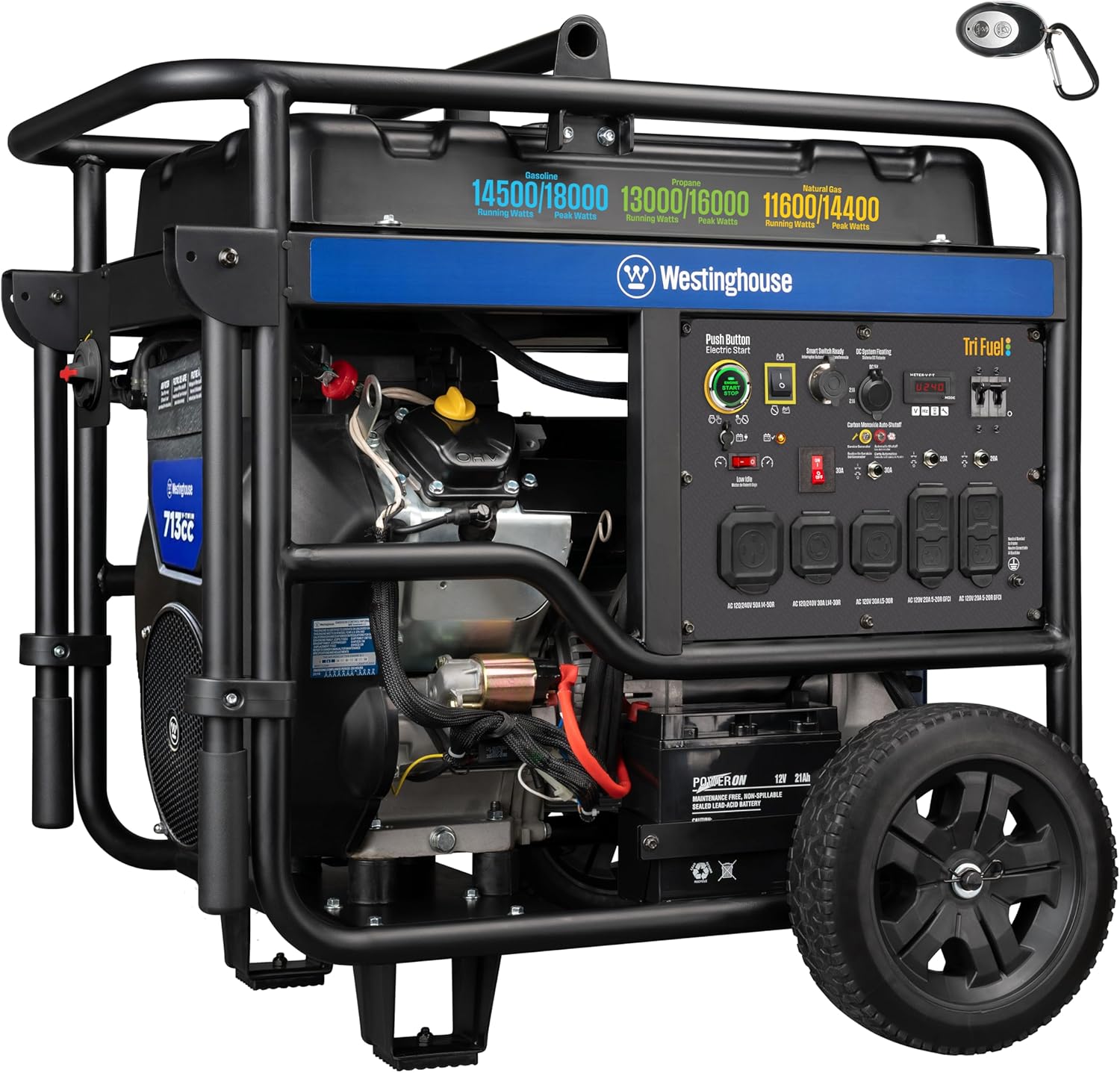
Key Details:
- 18,000 starting / 14,500 running watts (gas); 16,000 / 13,000 (propane); 14,400 / 11,600 (natural gas)
- Tri-fuel: gasoline, propane, natural gas; remote and electric start
- 50-amp 120/240V (14-50R) + 30-amp (L14-30R) transfer-switch-ready outlets
- 10.57-gallon tank; up to 12 hours runtime (50% load)
- Low THD (<5%), V-Twin 713cc engine, CO shutdown, digital data center
The Westinghouse 18000 Peak Watt Tri-Fuel Generator feels like the closest thing to a standby system without giving up mobility. With full 50-amp 240V output, we were able to power heavy circuits like central air conditioning, refrigerators, sump pumps, and lighting without constant load juggling. For homeowners who need serious capacity, this unit steps into the role of a true whole house backup generator.
Fuel flexibility is one of its strongest advantages. This tri-fuel generator runs on gasoline, propane, or natural gas, which adds real peace of mind during extended outages. If gasoline becomes hard to find after a storm, propane offers stable storage, and natural gas can provide continuous runtime as long as supply remains active.
In day-to-day operation, the digital data center makes monitoring voltage, frequency, and runtime straightforward. The rubber outlet covers add a layer of protection during outdoor use, which matters in rough weather. Like most high-output open-frame generators, it is heavier and louder than inverter models, so thoughtful placement and proper ventilation are important.
If you are considering a portable generator for whole house backup, this Westinghouse model delivers the output needed for both essential and comfort loads. It is a practical solution for larger homes that want reliable, high-wattage power without installing a permanent standby unit.
Pros:
- Huge output capacity with 50A/240V transfer-switch-ready power
- True tri-fuel setup with easy switching
- Low THD for safer use with electronics
- Remote start and solid accessory package included
Cons:
- Very heavy to move despite wheels
- Not as quiet as inverter-based designs
4. Best Quiet Performance: Champion Power Equipment 11,000-Watt Wireless Remote
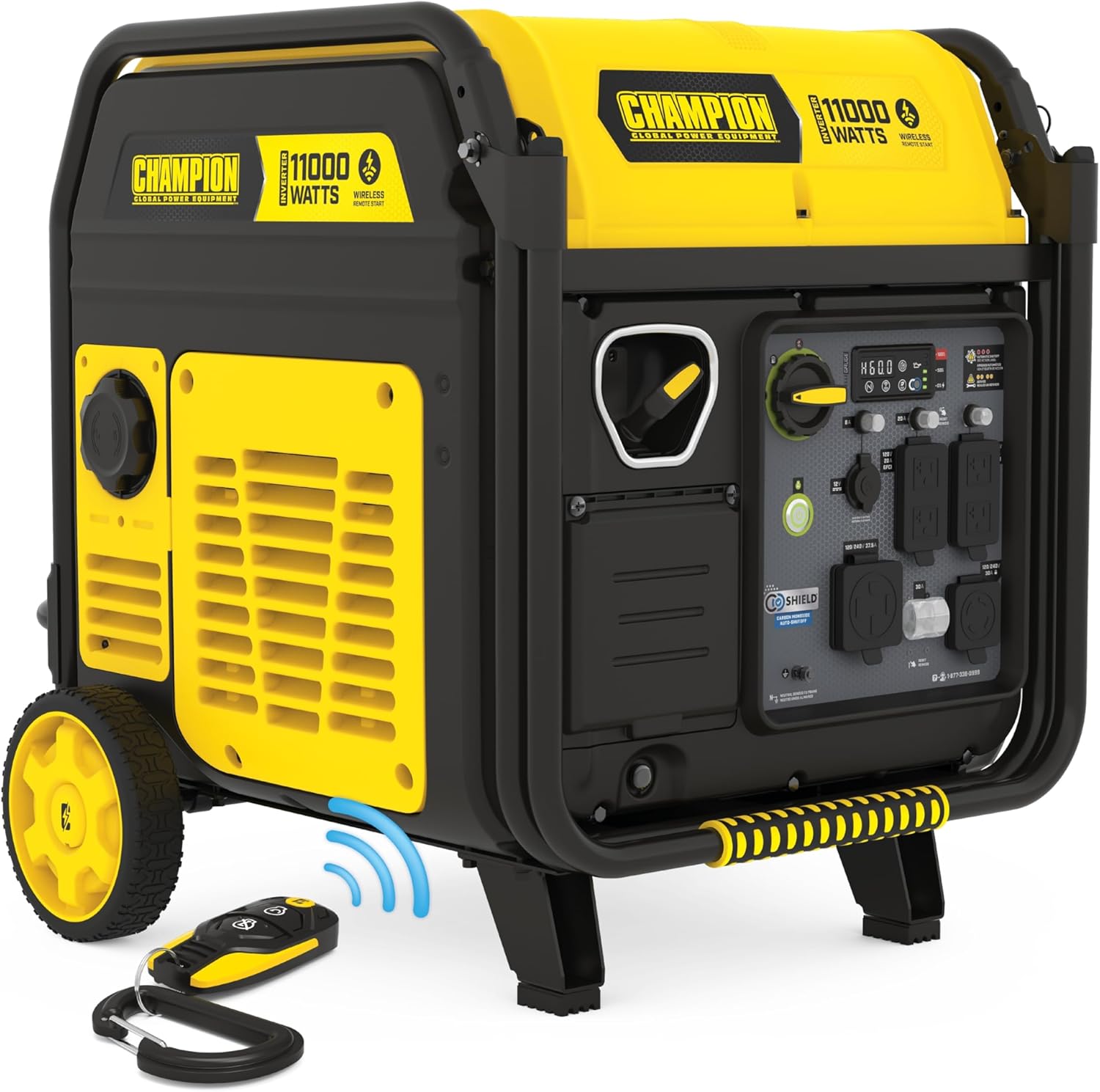
Key Details:
- 11,000 starting / 9,000 running watts
- Inverter design with less than 3% THD
- Remote start (80 ft range) with CO Shield
- 6.1-gallon tank; up to 15 hours runtime
- Noise rating: 64 dBA at 23 feet
This Champion model impressed us with how manageable it sounded given its size. At around 64 dBA, it’s noticeably quieter than most open-frame units in the same wattage class, making it less intrusive in a neighborhood setting.
The wireless remote start is genuinely handy, especially during poor weather. Cold Start technology also means it’s not a struggle to get going when the temperature drops. Outlets are well protected, and the inverter output kept electronics stable when tested with a mix of home devices.
Fuel efficiency is another win. Fifteen hours of runtime from a modest 6.1-gallon tank is excellent for a unit that still has enough capacity to keep essentials and some comfort loads going during an outage.
This generator fits whole-house backup capacity but also cares about noise and fuel efficiency. It’s a well-rounded emergency backup generator for most medium-sized households.
Pros:
- Quieter than most portables of this size
- Remote start with long range
- Good fuel economy with long runtimes
- Inverter output safe for electronics
Cons:
- Lower output than heavy-duty 15–18kW models
- Still not lightweight at 200 lbs
5. Best Value Option: WEN 14,500-Watt 120V/240V Tri-Fuel Generator
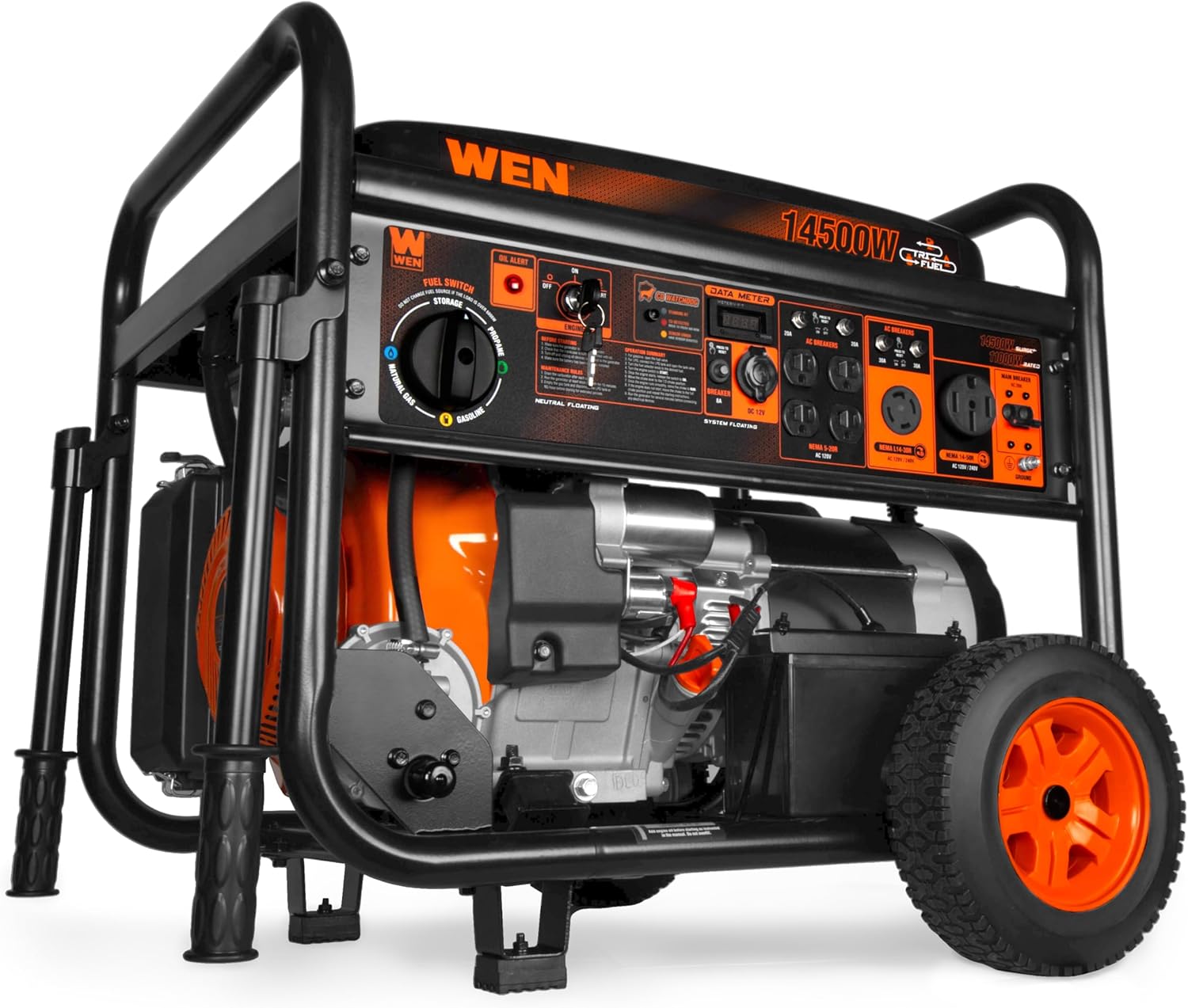
Key Details:
- Gas: 14,500 surge / 11,500 running; Propane: 12,500 / 10,300; NG: 10,500 / 8,750
- 120/240V with L14-30R and 14-50R (transfer-switch ready)
- Electric start
- 8.2-gallon tank; up to 12 hours at half load
- Wheel/handle kit; 12V DC automotive outlet
The WEN TF1450X delivers strong specifications at a price that feels realistic for homeowners buying their first large-capacity home backup generator. With transfer-switch-ready 50A and 30A outlets, it was straightforward to connect and keep essential household circuits running during testing.
Its tri-fuel capability adds useful flexibility. It runs on gasoline, propane, or natural gas. Output on natural gas is slightly lower than gasoline, which is typical for tri-fuel models. For most homes powering refrigerators, well pumps, and lighting, this simply means managing high-demand appliances during peak load moments.
The digital meter is simple but practical, showing voltage, frequency, and runtime hours to help with maintenance tracking.
It is not the quietest open-frame generator, so placement outdoors is important. Still, for families who want dependable portable home backup power without stepping into premium pricing, the WEN TF1450X offers a solid balance of output, flexibility, and value.
Pros:
- Affordable price for tri-fuel capability
- Transfer-switch-ready with both 50A and 30A outlets
- Electric start
- Easy to operate with electric start and clear controls
Cons:
- NG wattage drops noticeably compared to gas
- Louder open-frame design
6. Best Heavy-Duty Gas Power: Generac 19,300/15,500-Watt Portable Gas Generator
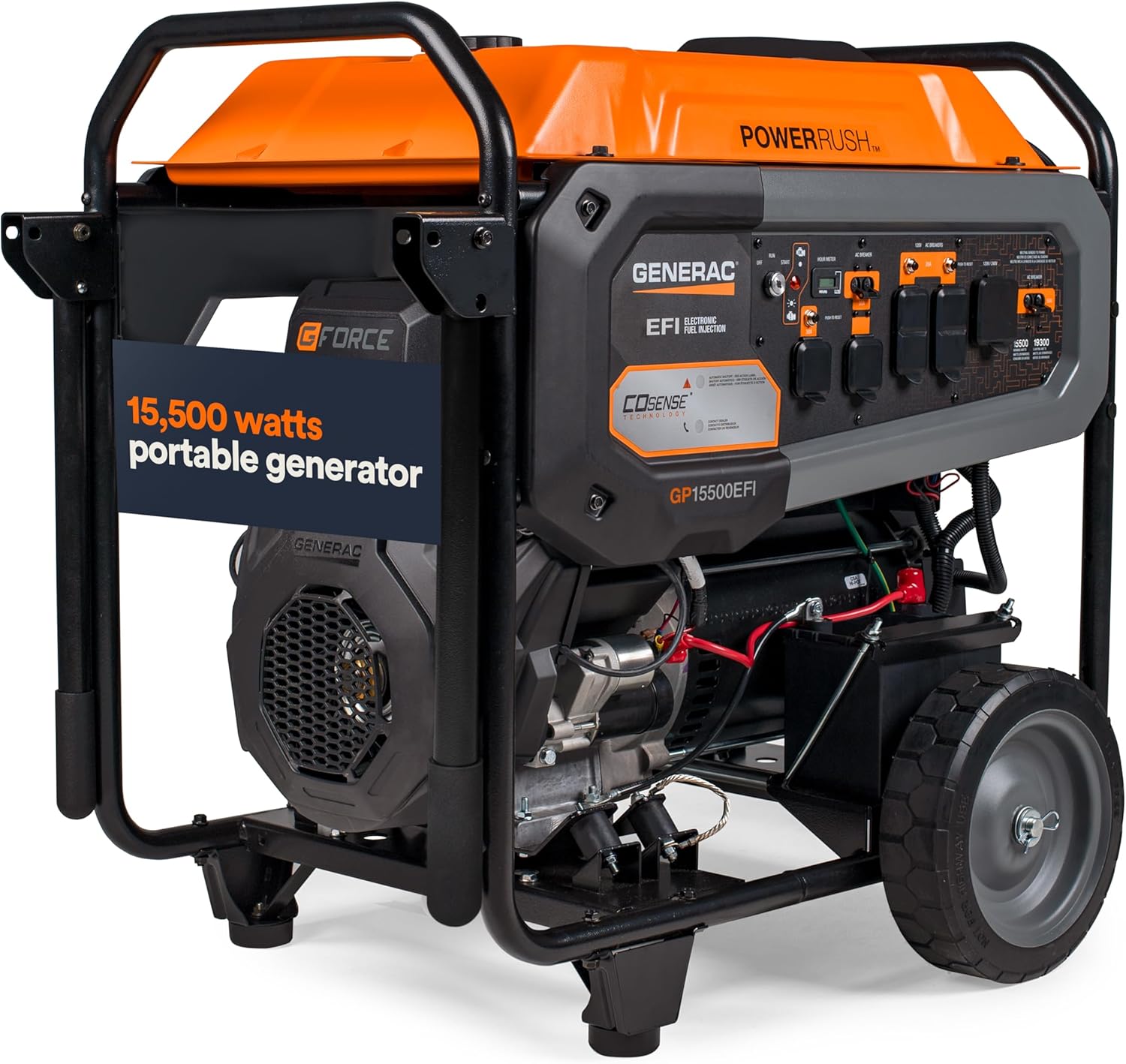
Key Details:
- 19,300 starting / 15,500 running watts
- 816cc EFI engine with electronic fuel injection
- TruePower™ low THD for sensitive electronics
- 11-hour runtime at 50% load; 5-gallon tank
- COsense® technology and rugged steel frame
The GP15500EFI is a powerhouse among portable generators for backup power, delivering serious wattage for homes that demand a lot of circuits online during an outage. Electronic fuel injection is a highlight here—it keeps the engine running efficiently even under varying loads and helps with smoother cold starts.
We noticed the build feels professional-grade: covered outlets, heavy-duty wheels, and a thick steel frame cradle that’s built to handle jobsite abuse. While it’s a portable generator, its weight makes it more of a roll-into-place solution than something you’ll casually move around.
Noise levels are high, as expected from an 800cc+ engine, but it’s balanced by long runtimes and consistent output. COsense monitoring adds a safety net, shutting the unit down if carbon monoxide builds up nearby.
This is a strong choice for homes that can’t compromise on wattage. If keeping HVAC, water heaters, and kitchen appliances online all at once matters, the Generac GP15500EFI delivers the muscle.
Pros:
- Huge 19,300 starting watts for heavy loads
- Electronic fuel injection boosts reliability
- Durable steel frame with protected outlets
- COsense monitoring enhances safety
Cons:
- Very heavy (450 lbs) and loud under load
- Smaller 5-gallon tank limits runtime vs competitors
7. Best Dual-Fuel Inverter: DuroMax XP16000iH 16,000-Watt Dual Fuel
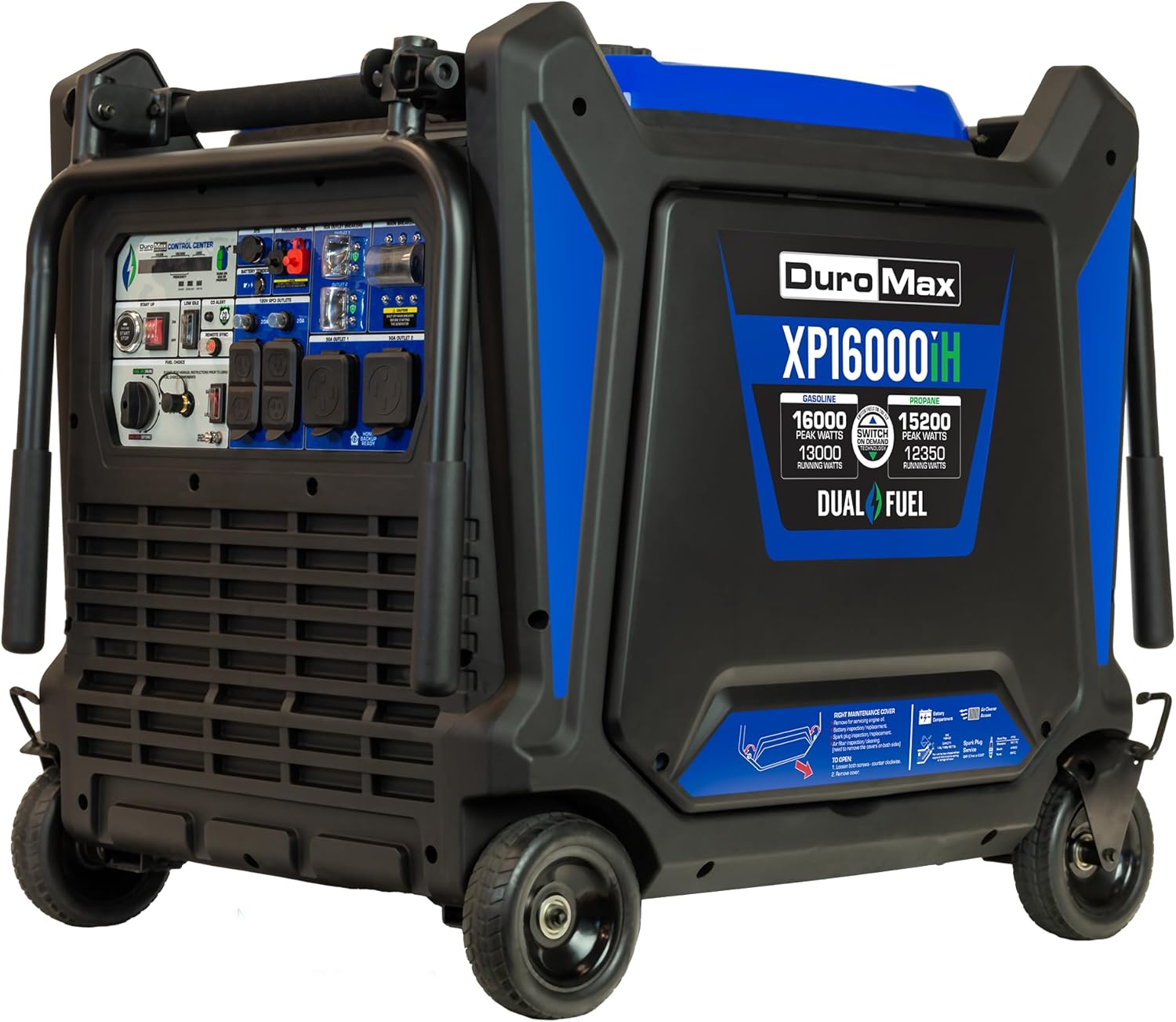
Key Details:
- 16,000 starting / 13,000 running watts
- Dual-fuel: gasoline or propane
- Digital inverter technology; clean power for electronics
- Remote start with battery tender included
- 10.5-gallon tank; about 10 hours runtime
The DuroMax XP16000iH combines high output with inverter technology, which is still uncommon at this power level. Because it produces clean, low-THD power, you can safely run televisions, laptops, and other sensitive electronics while also supporting large household appliances like refrigerators or air conditioners.
Its dual-fuel capability allows operation on gasoline or propane, adding flexibility during outages. The remote start feature is especially convenient when the generator is placed away from the home, and the digital control center makes it easy to monitor voltage, frequency, and load in real time.
At nearly 370 pounds, this is a large generator designed more for semi-permanent backup placement than frequent movement. Noise levels are lower than typical open-frame generators, though it is not as quiet as smaller inverter units.
This model suits families who want the efficiency and electronics safety of an inverter generator but need far more wattage than standard portable inverter models provide. It offers a practical balance between modern inverter technology and serious home backup capacity.
Pros:
- Inverter power in a high-capacity package
- Dual-fuel flexibility for emergencies
- Remote start and included battery tender
- EPA/CARB compliant for cleaner operation
Cons:
- Large and heavy to reposition
- Pricier than open-frame equivalents
8. Best Portable Midrange: GENMAX Generator EPA Compliant
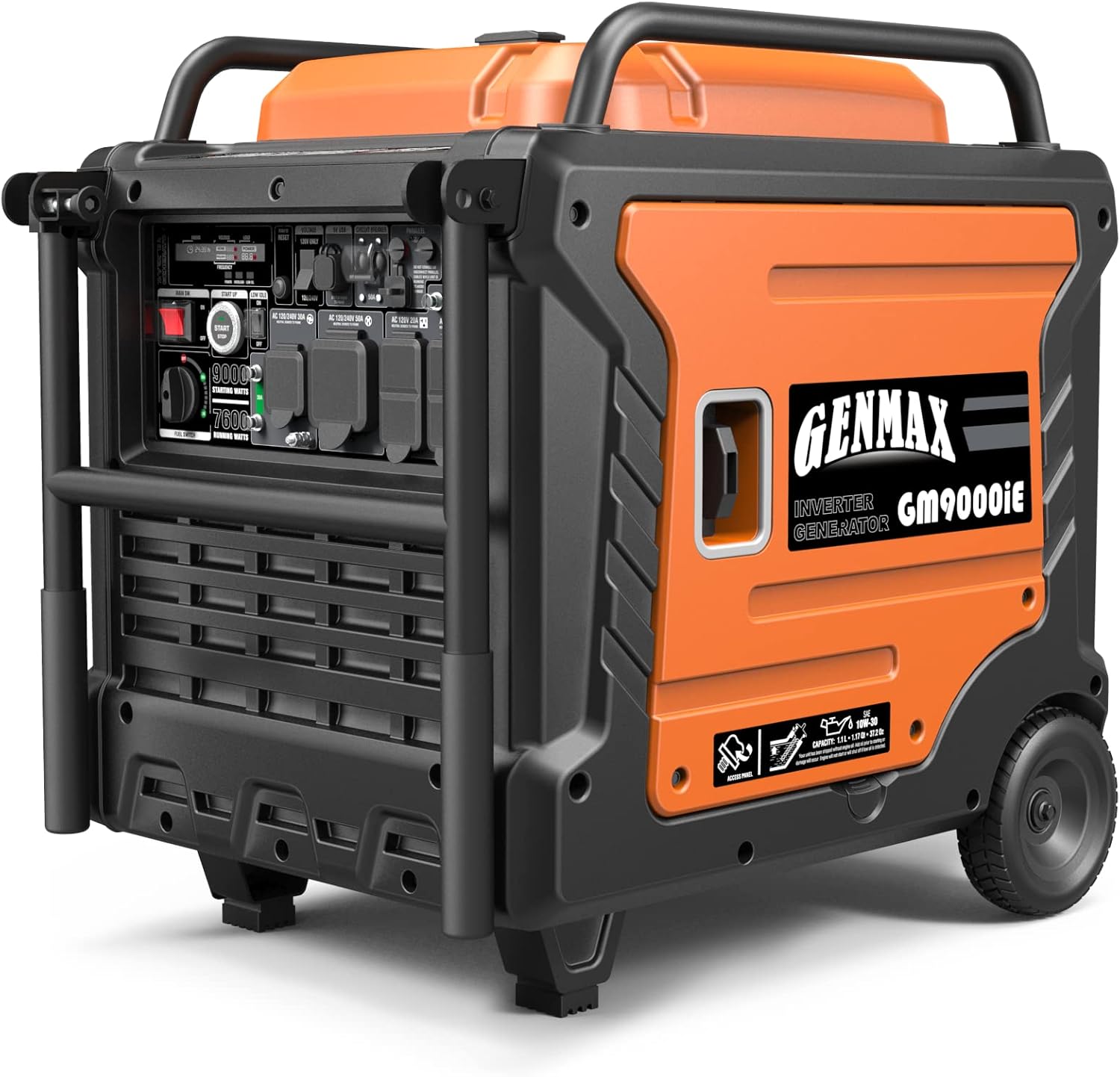
Key Details:
- 9,000 peak / 7,600 running watts
- Inverter technology with <3% THD
- 62 dBA at 23 feet (quarter load)
- Parallel-ready for up to 18,000 watts
- 6.9-gallon tank; about 10 hours runtime
GENMAX has carved out a space with lightweight but capable inverter generators, and the GM9000iE is no exception. At just over 250 pounds, it’s easier to maneuver than the larger 15kW+ units but still offers serious wattage for essential home backup.
The inverter design produces clean power for sensitive electronics, while still running appliances like refrigerators, sump pumps, and even small AC units. During use, the LCD control panel made it easy to track hours, voltage, and load levels without guesswork.
Parallel capability is a standout feature. For users who want flexibility, pairing two units can double capacity, making it possible to scale up when needed without investing in a single massive generator.
This generator is ideal for households that want a quieter, more manageable unit that can handle essentials comfortably, with the option to add more power later. It’s also practical for mobile businesses or RVers who occasionally need whole-house-level output.
Pros:
- Quiet inverter operation at 62 dBA
- Lighter weight than larger portables
- Parallel-ready for up to 18,000 watts
- Remote start adds convenience
Cons:
- Lower capacity than 15kW+ competitors
- Parallel kit sold separately
9. Best Quiet Inverter: Honda EU7000IS 7,000 Watt Inverter Portable
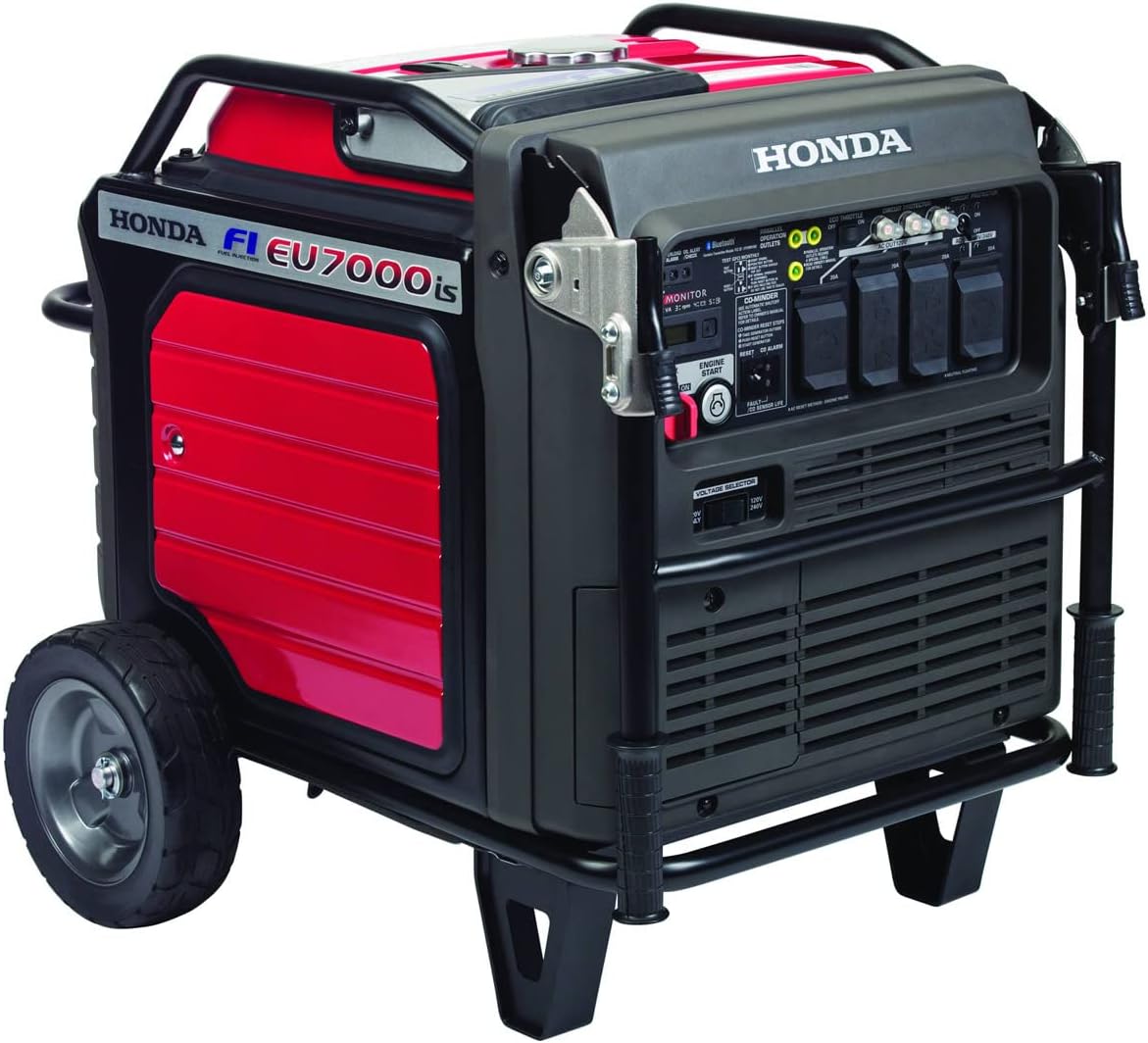
Key Details:
- 7,000 starting / 5,500 running watts
- Super-quiet operation; fuel efficient
- Bluetooth + Honda My Generator app
- CO-Minder carbon monoxide monitoring
- Runtime: 6.5 hours at 50% load (5.1-gallon tank)
Honda has long been known for quiet, reliable generators, and the EU7000iS shows why. It’s compact compared to heavy-duty portables but still brings enough power to keep lights, refrigeration, and entertainment online during an outage. Noise levels are impressively low, making it one of the most livable whole house backup choices if your needs aren’t extreme.
Bluetooth connectivity and the My Generator app make monitoring easy from inside the house, which is a thoughtful touch when weather makes trips outside unpleasant. The CO-Minder adds peace of mind by automatically shutting down if unsafe gas levels appear.
During runtime tests, fuel efficiency was solid—about 6.5 hours at half load on just over five gallons. That means fewer trips for fuel compared to some competitors. The inverter output was flawless, delivering smooth power even with sensitive devices.
This is a strong pick for readers who value quiet operation and brand reputation as much as wattage. It won’t power every large appliance at once, but it’s a premium, polished backup generator option.
Pros:
- Extremely quiet and efficient operation
- Trusted Honda reliability and support
- App integration for remote monitoring
- Clean inverter output
Cons:
- Lower wattage ceiling than larger portables
- Higher price per watt compared to rivals
What Is a Portable Whole House Generator?
A portable whole house generator is a high-capacity backup system capable of running an entire home’s circuits through a transfer switch. Unlike small portables that only handle a fridge or lights, these machines provide 240-volt output, high wattage, and the ability to power major appliances like HVAC systems, sump pumps, and water heaters.
In simple terms, it’s a movable version of a standby generator—delivering serious power without the permanent installation or cost.
Key features usually include:
- 120/240V output with a 50-amp receptacle
- Large engines (500cc–800cc) with electric or remote start
- Tri-fuel or dual-fuel flexibility for gasoline, propane, or natural gas
- Runtimes of 8–19 hours depending on load and tank size
- Safety systems like CO shutoff and low-oil sensors
Why Should You Choose a Portable Whole House Generator?
A portable whole house generator is a cost-effective alternative to a standby system because it delivers full-home backup power without requiring permanent installation.
These units are popular for families who need emergency backup during storms, grid failures, or seasonal outages. They are flexible enough to run on multiple fuel types, easy to store when not in use, and powerful enough to keep both essential and comfort circuits online.
How to Choose the Best Portable Whole House Generator
Finding the right portable home generator isn’t just about grabbing the model with the highest wattage. It comes down to matching your household’s needs with features that will actually make life easier during an outage.
Consider Your Power Requirements
The first step is knowing how much wattage you need. A large home with central air, electric water heaters, and multiple refrigerators will require far more than a small home with gas appliances. Start by adding up the starting and running watts of your essentials to avoid buying a unit that falls short when multiple appliances kick on.
Look at Fuel Flexibility
Generators that run on gasoline alone can leave you stranded if stations are closed. Dual-fuel or tri-fuel designs let you switch to propane or natural gas, giving flexibility in emergencies. Propane is easier to store for long periods, while natural gas, if available, provides an almost endless supply.
Evaluate Noise and Placement
High-wattage generators can be loud. If you live in a neighborhood with close neighbors, a quieter inverter design might be worth the extra cost. Placement also matters: units must be operated outdoors in a well-ventilated space, far from doors and windows.
Check Transfer Switch Compatibility
For true whole-house coverage, your generator must connect to a transfer switch. This setup lets you safely power multiple circuits without dangerous backfeeding. Look for models with 240V 50A outlets specifically designed for transfer switch use.
Prioritize Safety Features
Carbon monoxide sensors, low-oil shutoff, and covered outlets add layers of protection. These features aren’t just conveniences—they reduce the risk of accidents when running a generator for hours or days at a time.
How Much Power Do You Need to Run an Entire House?
The wattage you need depends on the size of your home and the appliances you plan to power. A small house may run comfortably on 7,000 to 9,000 watts, while larger homes often require 12,000 to 18,000 watts for whole-house coverage.
It’s important to consider both running watts (continuous demand) and starting watts (the surge appliances need when they first power up). Undersizing a generator can leave you juggling circuits during an outage.
| Appliance | Running Watts | Starting Watts |
| Central air conditioner (3–5 tons) | 3,500–6,000 | 7,000+ |
| Electric water heater | 4,500 | N/A |
| Refrigerator/freezer | 300–600 | 700–1,200 |
| Sump pump | 400–800 | 800–1,500 |
| Lighting and small electronics | 500–1,500 | N/A |
How Long Will a Portable Generator Run During an Outage?
Runtime depends on fuel type, tank size, and load. Gasoline-powered units with 8–10 gallon tanks typically last 8 to 12 hours at half load. Propane and natural gas often provide longer and more stable operation, especially with larger tanks or direct fuel lines.
In practice, households often use gasoline for short outages and switch to propane or natural gas for extended emergencies. Factors influencing runtime:
| Factor | Impact on Runtime | Example Values |
| Fuel tank size | Larger tanks increase runtime | 8–10 gallons: ~8–12 hours at 50% load |
| Load level | Higher demand shortens runtime | 25% load: ~15–19 hours; 75% load: ~6–8 hours |
| Fuel type | Propane/NG often run longer than gasoline | Gasoline: 8–12 hrs; Propane: 10–17 hrs |
| Engine efficiency | EFI engines use fuel more effectively | Standard carburetor: baseline; EFI: +10–15% runtime |
Portable vs Standby Whole House Generators
Portable whole house generators offer high output without the steep installation cost of standby systems. Standby models, however, provide more convenience and higher overall capacity.
| Feature | Portable Whole House Generators | Standby Whole House Generators |
| Cost | $1,500 – $5,000 | $8,000 – $15,000+ (including installation) |
| Power Range | 7,000 – 18,000 watts | 20,000 – 40,000 watts |
| Fuel Options | Gasoline, propane, natural gas (tri-fuel) | Natural gas or propane (direct line) |
| Setup | Manual setup with transfer switch | Automatic switchover during outages |
| Portability | Can be moved or stored when not in use | Permanently installed outdoors |
| Noise | 64–80 dBA (inverter designs quieter) | 55–65 dBA (enclosed housing) |
| Maintenance | Seasonal owner checks, oil/filter changes | Professional inspections recommended annually |
Safety and Maintenance Tips
Using a portable generator safely is as important as choosing the right model. Incorrect setup, overloading, or poor maintenance can create hazards or shorten the unit’s lifespan:
- Operate outdoors only: Keep at least 15–20 feet from windows, doors, and vents.
- Install CO detectors indoors: Prevent carbon monoxide poisoning during extended use.
- Use transfer switches or heavy-duty cords: Avoid dangerous backfeeding.
- Check oil and filters regularly: Change oil after the first 20–30 hours, then as per manufacturer guidelines.
- Stabilize or drain fuel before storage: Gasoline degrades quickly, while propane stores longer.
- Run monthly test cycles: Short runs keep components lubricated and ensure readiness.
Final Words
Portable whole house generators have become a practical alternative to expensive standby systems, giving families reliable home backup power without the steep installation costs. The models we covered here range from heavy-duty gas units to tri-fuel machines and even battery-based systems, each offering its own mix of wattage, runtime, and safety features.
If you want the most capable all-around option, the Westinghouse 18000 Peak Watt Tri-Fuel is the standout choice. It combines sheer output with fuel flexibility and user-friendly controls, making it one of the most dependable portable generators for full-home coverage. For those who prefer a rugged tri-fuel workhorse built to handle demanding loads, the DuroMax XP15000HXT 15,000 Watt Tri Fuel offers excellent natural gas performance and a smart digital interface that makes managing long outages less stressful.
No matter which direction you go, the key is matching generator capacity to your home’s needs and choosing a unit that balances power, runtime, and ease of use. With the right portable generator, you’ll have peace of mind knowing your essentials—and comforts—stay online when the grid goes dark.
Related FAQs
What size portable generator is needed to run a whole house?
Most homes require between 12,000 and 18,000 watts for full coverage, while smaller houses may need 7,000 to 9,000 watts.
Can a portable generator power central air conditioning?
Yes, but you’ll need a high-capacity unit of at least 12,000 to 15,000 watts to handle the starting surge of a 3–5 ton AC system.
How long will a portable whole house generator run?
Runtime depends on tank size, load, and fuel type. Many large portables run 8–12 hours on gasoline and longer on propane or natural gas.
Are portable whole house generators safe for electronics?
Models with low THD (under 5%) or inverter technology provide clean power that is safe for sensitive devices like computers and TVs.
What’s the difference between portable and standby whole house generators?
Portable models cost less and can be moved or stored, while standby systems are permanently installed, switch on automatically, and offer higher wattage capacity.

Matt Riggins has spent years working with generators, solar panels, transfer switches, batteries, fuel setups, and circuit wiring. He’s the guy friends and neighbors call when the power goes out or something just won’t run right. From off-grid installs to fixing up old or new portable units, he’s been through it all. Alan doesn’t just talk theory, he’s out there solving real problems and helping people keep their systems running when it matters most.



![What Is A Solar Inverter? [How It Works, Types & Choosing The Right One]](https://www.powerelectrichub.com/wp-content/uploads/2024/08/What-Is-a-Solar-Inverter-1024x576.jpg)