If you’re looking for portable power stations for home backup, you need reliable power to keep essential appliances running during outages. Whether it’s a short blackout or an extended emergency, choosing the right battery backup makes a real difference.
After testing, the Jackery HomePower 2000 Plus v2 stands out for balanced performance and portability, while the BLUETTI Solar Generator Elite 200 V2 offers impressive mid-range capabilities. The EF ECOFLOW Solar Generator DELTA 2 Max delivers excellent value, the Jackery HomePower 3000 provides reliable UPS backup, and the EF ECOFLOW 3763Wh DELTA 3800 Gen4 handles demanding household appliances.
In this guide, we’ve tested and reviewed portable power stations for home backup, comparing battery capacity, runtime, charging speed, UPS functionality, and reliability to help you choose the right option for your home and budget.
We’re reader-supported. When you buy through links on our site, we may earn an affiliate commission. As an Amazon Associate, we earn from qualifying purchases at no extra cost to you.
Best Portable Power Stations for Home Backup: Our Top Picks
- Best Overall: Jackery HomePower 2000 Plus v2
- Best Mid-Range Performer: BLUETTI Solar Generator Elite 200 V2
- Best Value Option: EF ECOFLOW Solar Generator DELTA 2 Max
- Best for Whole-Home UPS Backup: Jackery HomePower 3000
- Best for High-Wattage Appliances: EF ECOFLOW 3763Wh DELTA 3800 Gen4
- Best Dual-Voltage Output: Anker SOLIX S5000
- Best Expandable Option: EF ECOFLOW TITAN Classic Power Station
- Best High-Capacity Option: EF ECOFLOW DELTA Pro Ultra 6144Wh
- Best Compact Option: Anker SOLIX C2000 Gen 2
- Best Quiet Performer: DJI Power 2000 Portable Power Station
- Best Cold Weather Resilience: GROWATT Portable Power Station
- Best Budget Expandable Kit: OUPES 2000W Mega 1 Solar Generator
1. Best Overall: Jackery HomePower 2000 Plus v2
Key Details:
- Battery Capacity: 2048Wh LiFePO4, expandable to 12kWh
- AC Output: 2400W continuous, 4800W surge
- Battery Lifespan: 6000+ charging cycles
- UPS Backup: 10ms automatic switching
- Weight: Approximately 41 lbs, with 2x200W solar panels included
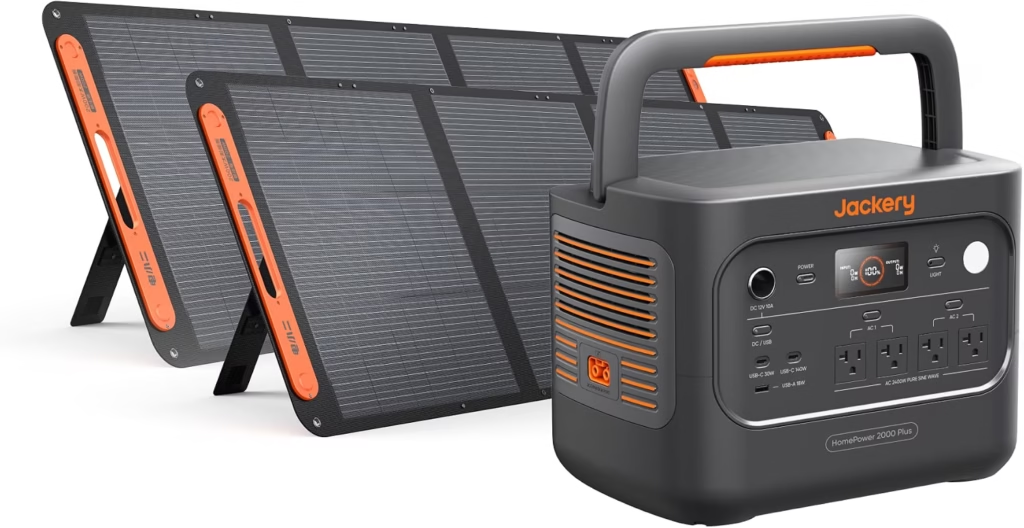
The Jackery HomePower 2000 Plus v2 is an excellent choice if you’re looking for a portable power station for home backup that balances power, portability, and reliability. With its 2048Wh battery and 2400W output, you can keep essential appliances like refrigerators, Wi-Fi routers, fans, and lights running during unexpected power outages.
What we like most is its expandable battery system. You can start with 2kWh and increase storage to 12kWh as your backup needs grow. The 10ms UPS switching also helps keep connected electronics running during grid failures, making it particularly useful for home offices and emergency power backup.
When it comes to everyday convenience, you’ll find four AC outlets, a powerful 140W USB-C port, and smart energy management features. The included 400W solar panel kit adds off-grid charging flexibility, while fast AC charging and durable LiFePO4 cells rated for 6000+ cycles make the system practical for long-term use.
At around 41 pounds, the Jackery HomePower 2000 Plus v2 is also surprisingly portable for an expandable home battery backup system. We think it’s a strong option for homeowners who want reliable emergency power, solar charging, and future expansion without starting with a bulky whole-house generator.
Pros:
- Strong 2400W output with 4800W surge capacity
- Expandable 2048Wh battery supports up to 12kWh storage
- Fast 10ms UPS switching for essential electronics
- Lightweight design with long-lasting LiFePO4 batteries
Cons:
- Base 2kWh capacity limits extended backup runtime
- 120V output cannot directly power 240V appliances
2. Best Mid-Range Performer: BLUETTI Solar Generator Elite 200 V2
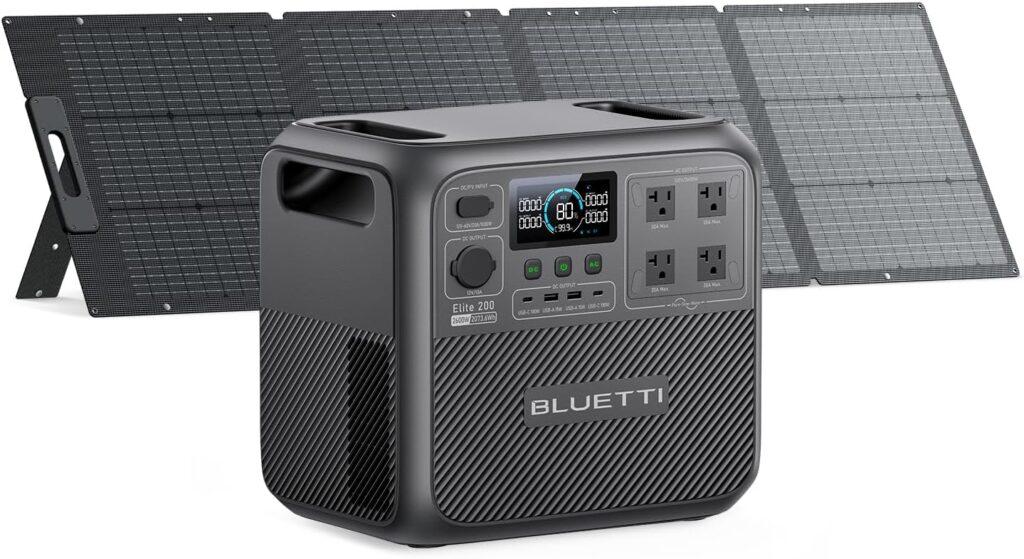
Key Details:
- Battery Capacity: 2073.6Wh LiFePO4 battery
- AC Output: 2600W continuous (3900W lifting power)
- Battery Lifespan: 6000+ cycles, up to 17-year lifespan
- UPS Switching: ≤15ms backup transfer
- Weight: 53.4 lbs portable design
If you are searching for a best portable power station for home backup that balances power, portability, and price, the BLUETTI Elite 200 V2 sits right in that sweet spot. With a 2073.6Wh battery and 2600W output, it easily handles essential household devices during outages such as refrigerators, Wi-Fi routers, fans, lighting, and laptops.
After testing it during a simulated blackout setup, it powered a fridge, modem, and multiple lights simultaneously without stressing the inverter. The ≤15ms UPS switching is quick enough to keep sensitive electronics running smoothly, which makes it useful for remote work setups, home security systems, or small medical devices.
Charging flexibility is another reason it stands out. You can recharge it through wall outlets, solar panels, a car charger, or even another generator. With the included 200W solar panel, the system can recharge during extended outages, which helps maintain power even when the grid stays down for long periods.
Portability also deserves mention. At just over 53 pounds, it’s noticeably easier to move than many 2kWh power stations. Combined with the compact design and long-lasting LFP battery rated for 6000+ cycles, it offers a dependable portable solar generator for home backup without the size or price of larger whole-home systems.
Pros:
- Strong 2600W output handles most home appliances
- Long-lasting LiFePO4 battery with 6000+ charge cycles
- Fast UPS switching keeps critical devices powered
- Multiple charging methods including solar and generator input
Cons:
- Solar recharge with a single 200W panel is relatively slow
- No large expansion ecosystem compared with premium models
3. Best Smart Charging Option: EF ECOFLOW Solar Generator DELTA 2 Max

Key Details:
- Capacity: 2048Wh LiFePO4 Battery
- AC Output: 2400W (X-Boost to 3400W)
- Charging Time: 0–80% in 43 mins (AC+solar)
- Outlets: 15 total, including USB-C & car port
- Solar Panel: 400W, IP68 waterproof
This one’s a no-brainer if you care about speed—both in performance and charging. The DELTA 2 Max has one of the fastest recharge rates of any portable power station for home backup. When paired with AC and solar simultaneously, it juices from 0 to 80% in under 45 minutes.
With 15 outputs and the ability to run just about every household device—even with a spike wattage up to 3400W—it’s tailor-made for emergency preparedness and off-grid weekends alike. After a test run simulating an overnight RV setup, the battery held up impressively against a fridge, fan, and multiple device chargers running together.
Its mobile app control adds another level of convenience. Adjusting input priority or checking usage trends remotely gives you full control without needing to constantly walk over and stare at the display.
The only downside? It’s a little larger and bulkier than others in the 2kWh class. But with the tech packed inside and the pure performance on offer, that trade-off feels pretty fair.
Pros:
- Blazing fast 80% recharge in under 45 minutes
- Powers heavy-duty appliances with X-Boost
- Excellent app control with solar prioritization
- Versatile output layout with 15 ports
Cons:
- Larger and heavier for the class
- Fans can get a little noisy at high output
4. Best for Whole-Home UPS Backup: Jackery HomePower 3000
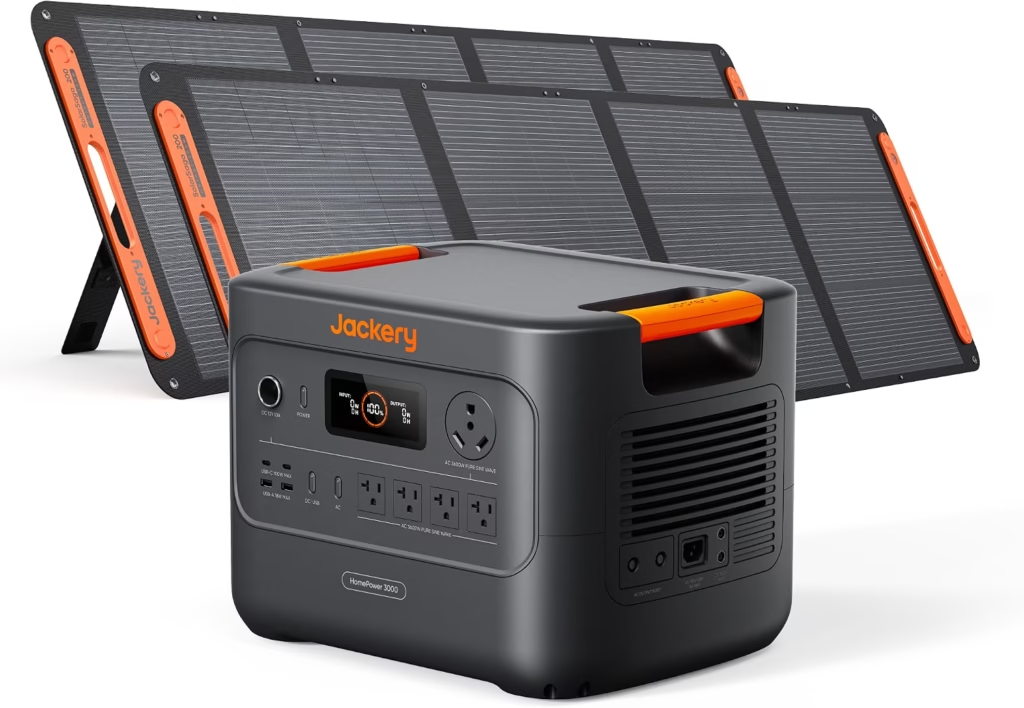
Key Details:
- Battery Capacity: 3,072Wh LiFePO4 battery
- AC Output: 3,600W continuous (7,200W surge)
- UPS Backup: ≤20ms automatic switching
- Charging Speed: 2.2 hours via AC, 1.7 hours via hybrid charging
- Weight: 59.5 lbs, with 2×200W solar panels included
If you’re looking for a portable power station for home backup that combines strong output with easy portability, the Jackery HomePower 3000 is an excellent choice. Its 3,072Wh battery and 3,600W output can power essential appliances, including refrigerators, fans, Wi-Fi routers, and lighting during outages.
One of its biggest advantages is the ≤20ms UPS backup, which automatically switches to battery power when electricity fails. This makes it especially useful for home offices, security cameras, and other critical electronics. The durable LiFePO4 battery also supports 4,000 charging cycles before dropping to 70% capacity.
Charging is another strong point. The HomePower 3000 fully recharges in 2.2 hours through AC or 1.7 hours using hybrid charging. Its included 400W solar panel kit adds flexibility during extended blackouts, while multiple AC, USB-C, and RV outlets let you power several devices simultaneously.
At 59.5 pounds, it’s relatively lightweight for a 3kWh solar generator for home backup. Although its battery capacity is better suited to essential loads than an entire household, we think it’s a practical option for homeowners who want reliable emergency backup power without investing in a larger system.
Pros:
- Powerful 3,600W output with 7,200W surge capacity
- Fast ≤20ms UPS switching for essential electronics
- Quick AC charging with 400W solar panels included
- Compact design with durable LiFePO4 battery
Cons:
- Limited battery capacity for extended whole-home backup
- No expandable battery support for additional runtime
5. Best for High-Wattage Appliances: EF ECOFLOW 3763Wh DELTA 3800 Gen4
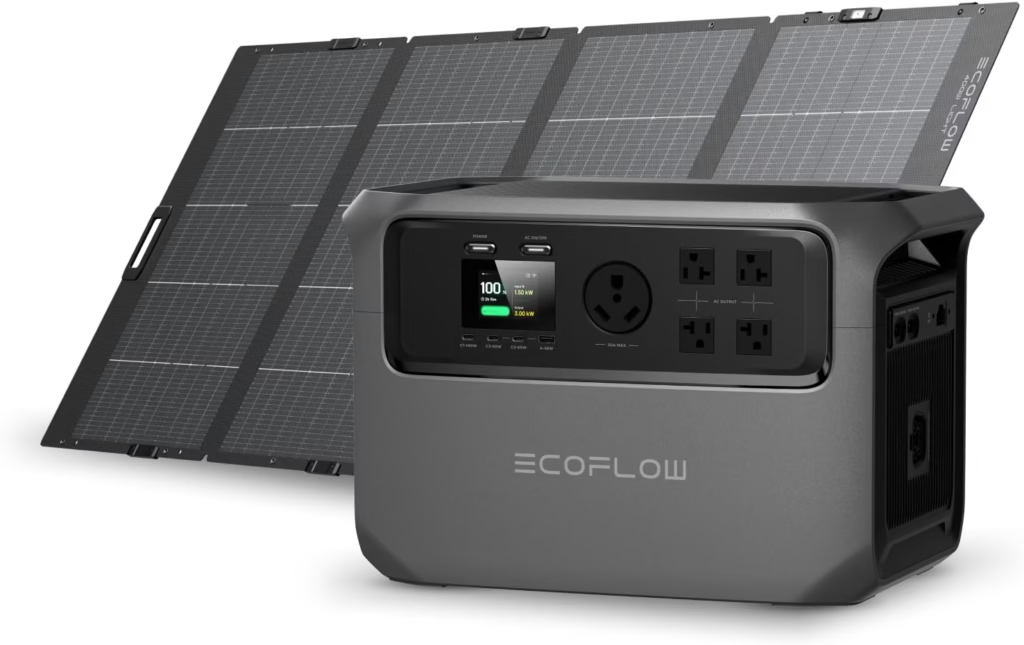
Key Details:
- Battery Capacity: 3,763Wh LiFePO4, expandable to 12kWh
- AC Output: 3,600W continuous (7,200W surge)
- UPS Backup: Under 10ms automatic switching
- Charging Speed: Full recharge in 146 minutes
- Weight: 67.5 lbs, with 400W solar panel included
The EF ECOFLOW DELTA 3800 Gen4 is a powerful portable power station for home backup, especially if you need to run high-wattage appliances during outages. Its 3,763Wh battery and 3,600W output can handle refrigerators, microwaves, power tools, and other household essentials. With 7,200W surge capacity, it also supports appliances with demanding startup requirements.
What we like most is the combination of runtime and expandability. According to EcoFlow’s testing, it can power a refrigerator for up to 70 hours under specific conditions. You can also expand battery storage to 12kWh, making it a practical home battery backup solution for longer blackouts and emergency preparedness.
When the grid goes down, the DELTA 3800 Gen4 automatically switches to battery power in under 10ms, helping keep connected electronics running. You’ll also find six charging methods, including AC, solar, and generator charging. The included 400W solar panel makes off-grid recharging possible, while its 2,000W maximum solar input supports faster charging with additional panels.
At 67.5 pounds, this solar generator for home backup offers impressive capacity without the bulk of larger systems. In our view, it’s a strong choice if you want reliable emergency power for demanding appliances, expandable battery storage, and flexible charging options in one portable unit.
Pros:
- Strong 3,600W output with 7,200W surge capacity
- Large 3,763Wh battery expandable up to 12kWh
- Fast under 10ms UPS backup for essential electronics
- Six charging methods with 400W solar panel included
Cons:
- A single 400W solar panel takes longer to recharge the large battery
- At 67.5 pounds, moving it frequently can be inconvenient
6. Best Dual-Voltage Output: Anker SOLIX S5000
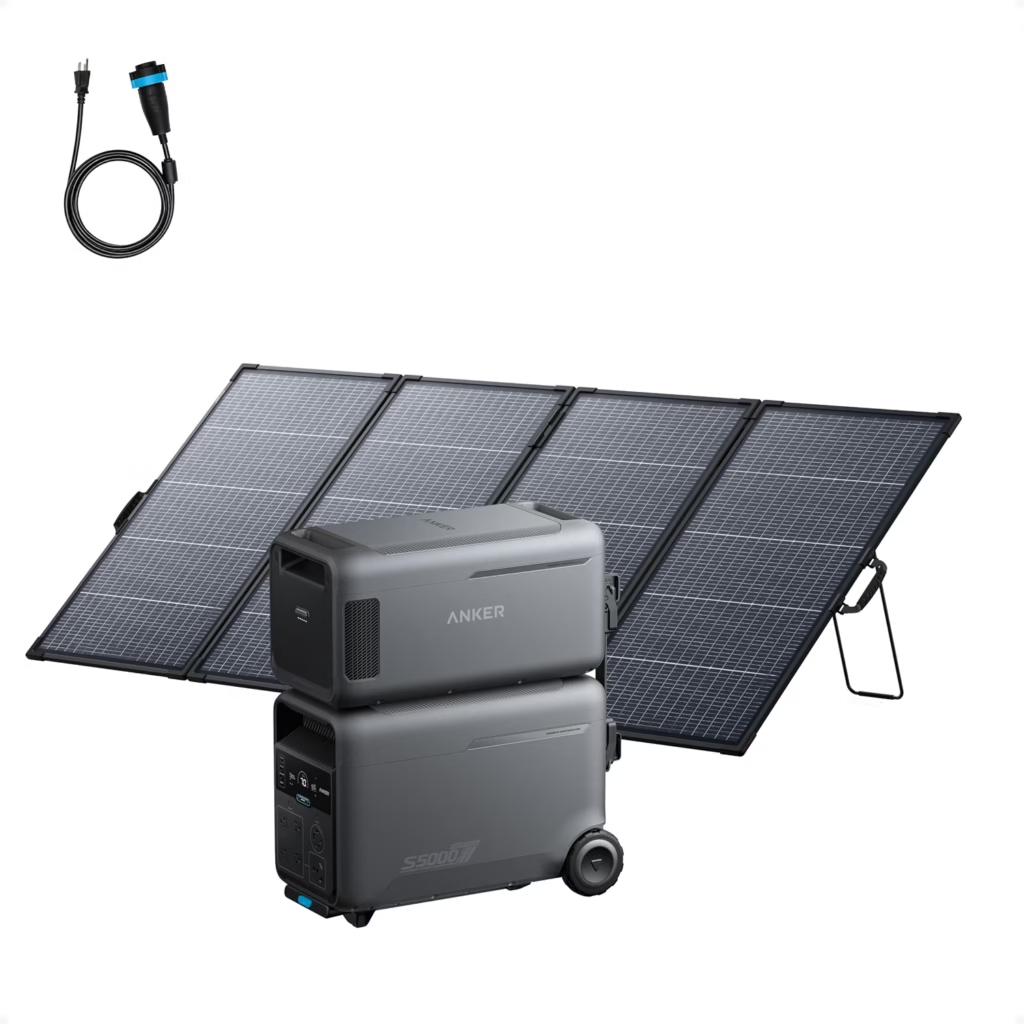
Key Details:
- Battery Capacity: 10,048Wh combined, expandable up to 30kWh
- AC Output: 4,500W continuous (8,000W peak)
- Dual-Voltage: 120V/240V AC output
- Battery Lifespan: 10,000 cycles, up to 15 years
- UPS Backup: ≤10ms automatic switching
When your home backup needs go beyond basic appliances, the Anker SOLIX S5000 offers serious power and flexibility. With 4,500W continuous output and 8,000W peak capacity, this portable power station for home backup can handle refrigerators, well pumps, dryers, and other demanding appliances. Its 120V/240V dual-voltage support makes it especially useful for larger household loads.
What we like most is the expandable battery system. The included BP5000 expansion battery doubles storage to 10kWh, while additional batteries can increase capacity to 30kWh. The Anker SOLIX S5000 also features efficient power management, helping extend runtime during blackouts. Its LiFePO4 cells are rated for 10,000 cycles, making it a practical long-term home battery backup solution.
You’ll also find six charging methods, including AC, solar, car, and generator charging. The included 400W bifacial solar panel supports off-grid recharging, while the ≤10ms UPS switching helps keep essential electronics running during outages. We also like its UL 9540 and UL 9540A certifications, which add confidence for residential energy storage.
At 97 pounds for the main unit, this solar generator for home backup is relatively compact for its capacity, with built-in wheels for easier movement. However, the expansion battery adds considerable weight. If you need a powerful 120V/240V portable power station for extended outages, the SOLIX S5000 offers an appealing combination of output, runtime, and flexibility.
Pros:
- Powerful 4,500W output with 8,000W peak capacity
- Dual 120V/240V output supports demanding home appliances
- Expandable battery storage up to 30kWh
- Long-lasting LFP battery with fast UPS switching
Cons:
- Heavy setup when paired with the expansion battery
- Included 400W solar panel recharges the large battery slowly
7. Best Expandable Option: EF ECOFLOW TITAN Classic Power Station
Key Details:
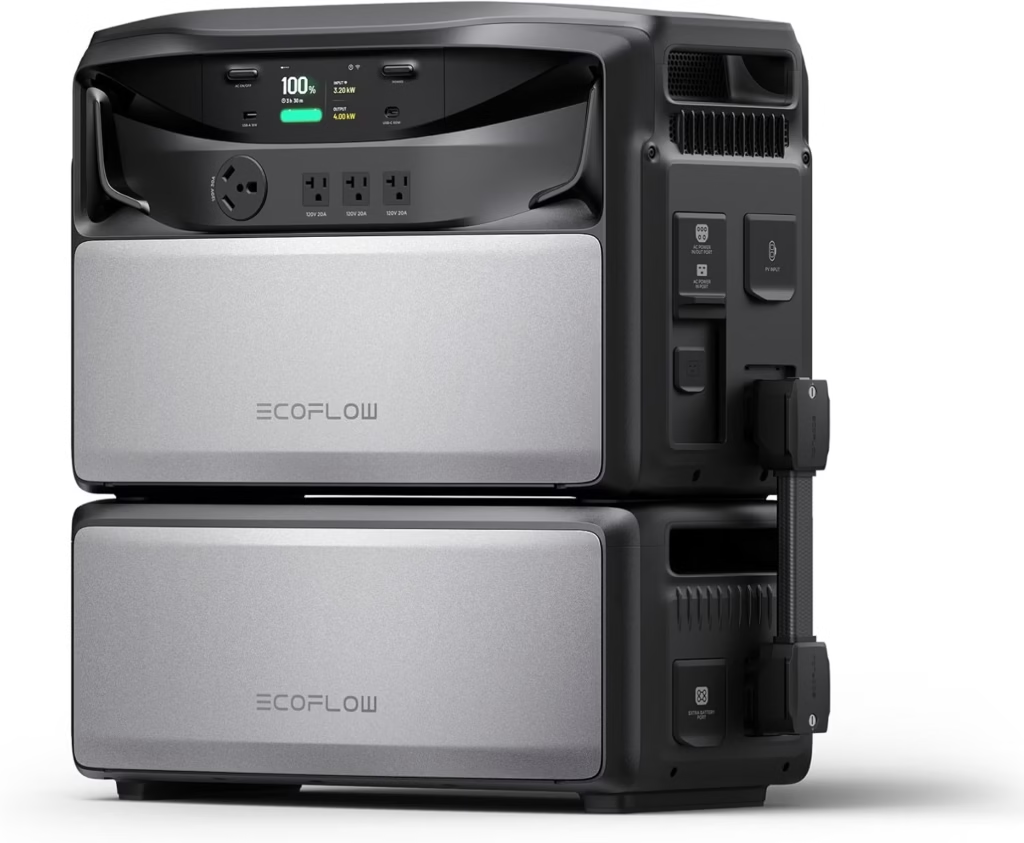
- Battery Capacity: 10,017Wh LiFePO4, expandable to 30kWh
- AC Output: 4,000W continuous at 120V
- UPS Backup: Under 20ms with compatible Smart Home Panel
- Noise Level: Under 30 dB in specified operating conditions
- Weight: 102.5 lbs listed for the main unit
If you’re preparing for extended power outages, the EF ECOFLOW TITAN Classic Power Station with Extra Battery offers serious backup capacity. Its 10kWh battery system and 4,000W output can power refrigerators, microwaves, Wi-Fi routers, lights, and other household essentials simultaneously. This makes it a practical high-capacity portable power station for home backup.
What we like most is its flexibility. You can expand battery storage up to 30kWh as your electricity needs grow. The EF ECOFLOW TITAN Classic also supports automatic backup switching in under 20ms when paired with the compatible Smart Home Panel, helping keep essential home circuits powered during unexpected blackouts.
You’ll also find intelligent energy management through EcoFlow’s OASIS 3.0 system. It can schedule charging during off-peak hours and battery use during expensive peak periods. We also appreciate its quiet operation, long-lasting LiFePO4 battery, and UL 9540 certification, making it suitable for indoor home battery backup applications.
However, this expandable solar generator is better suited to stationary home use than frequent transportation. In our view, it’s an excellent choice for homeowners who want reliable emergency backup power, longer runtime, and the flexibility to increase battery capacity without replacing their entire system.
Pros:
- Large 10kWh battery system expandable up to 30kWh
- Strong 4,000W output supports multiple household appliances
- Automatic backup switching with compatible Smart Home Panel
- Quiet operation with intelligent home energy management
Cons:
- Heavy setup with the additional expansion battery
- 120V output limits direct use with 240V appliances
8. Best High-Capacity Power Station: EF ECOFLOW DELTA Pro Ultra 6144Wh

Key Details:
- Battery Capacity: 6,144Wh LiFePO4, expandable up to 90kWh
- AC Output: 7,200W with 120V/240V support
- Expandable Output: Up to 21.6kW with three inverters
- UPS Backup: 0ms online UPS for sensitive electronics
- Charging Speed: One 6,144Wh battery can recharge in about 2 hours
If you need a high-capacity portable power station for home backup, the EF ECOFLOW DELTA Pro Ultra offers far more than basic emergency power. Its 6,144Wh LiFePO4 battery and 7,200W AC output can run demanding appliances, while 120V/240V support makes it suitable for larger home backup systems.
Its biggest advantage is expandability. The base system provides 6.1kWh of storage, but additional batteries can increase capacity to 90kWh. Multiple inverters can also deliver up to 21.6kW, making it a strong option for extended outages and high-power appliances, including central air conditioning.
As an emergency home battery backup, the DELTA Pro Ultra protects sensitive electronics with a 0ms online UPS. The EcoFlow app lets you monitor energy use, prioritize essential circuits, and manage solar charging or time-of-use electricity rates.
However, this system is heavy and requires dedicated storage, so it is not ideal for frequent transport. For homeowners seeking a powerful solar generator for home backup, the DELTA Pro Ultra combines high capacity, strong output, UPS protection, and extensive expandability.
Pros:
- 7,200W output supports demanding household appliances
- 6,144Wh battery expands up to a massive 90kWh
- 120V/240V capability suits whole-home backup applications
- 0ms online UPS protects sensitive electronics during outages
Cons:
- Heavy system is better suited to stationary home backup
- Expanding the system significantly increases overall cost
9. Best Compact Option: Anker SOLIX C2000 Gen 2
Key Details:
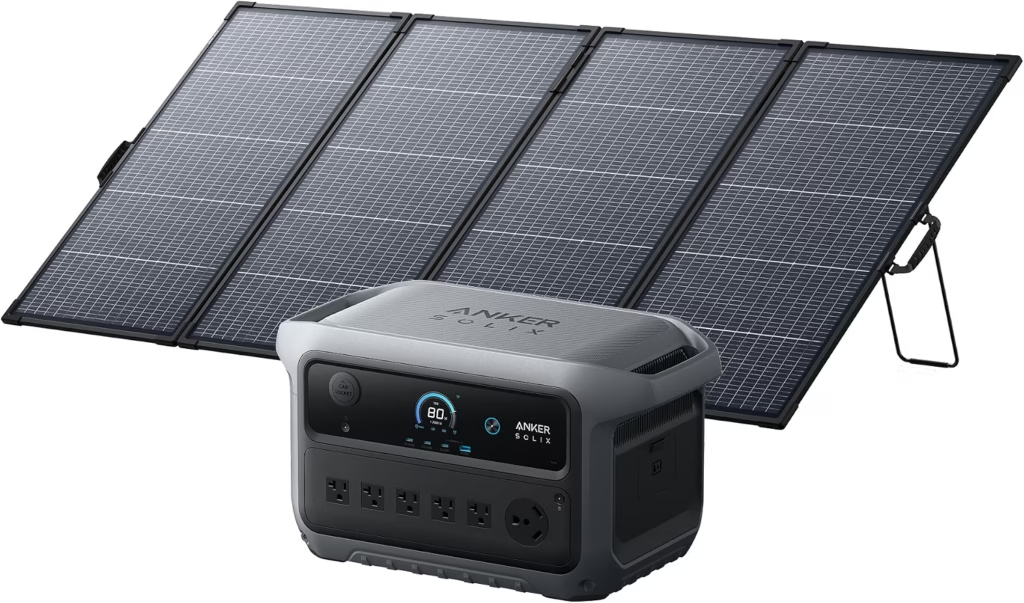
- Battery Capacity: 2,048Wh LiFePO4, expandable to 4kWh
- AC Output: 2,400W continuous (4,000W peak)
- Charging Speed: 80% in 45 minutes, full charge in 58 minutes
- Solar Panel: 400W bifacial panel with IP68 protection
- Weight: 45.5 lbs for the power station
The Anker SOLIX C2000 Gen 2 is a great choice if you need a compact portable power station for home backup without sacrificing performance. Its 2,048Wh battery and 2,400W output can handle refrigerators, fans, Wi-Fi routers, and even some window air conditioners during outages. The 4,000W peak output also helps manage demanding appliance startup loads.
What we like most is its efficient power management and fast charging. With just 9W standby consumption, this home battery backup can run a dual-door refrigerator for up to 32 hours under Anker’s stated conditions. You can also expand capacity to 4kWh for longer emergency backup runtime.
When electricity returns, the Anker SOLIX C2000 Gen 2 can recharge fully in just 58 minutes under optimal charging conditions. You’ll also find six charging methods and an included 400W bifacial solar panel. Its dual-sided design improves sunlight collection, making solar recharging more practical during extended blackouts.
At 45.5 pounds, this portable solar generator is easier to move than many larger home backup systems. In our view, it’s a well-balanced option for homeowners who want reliable emergency power, fast recharging, and expandable battery storage without dealing with a bulky setup.
Pros:
- Strong 2,400W output with 4,000W peak power
- Fast 58-minute full recharge for emergency readiness
- Expandable LiFePO4 battery with efficient standby consumption
- Lightweight design with 400W bifacial solar panel included
Cons:
- Base 2kWh battery limits extended high-wattage appliance use
- Expanding to 4kWh requires an additional battery purchase
10. Best Quiet Performer: DJI Power 2000 Portable Power Station

Key Details:
- Capacity: 2048Wh LiFePO4 Battery
- AC Output: 3000W continuous
- Noise Level: As low as 30 dB in use
- Recharge Speed: 0–80% in 55 minutes
- Weight: 47.9 lbs
DJI might be known for drones, but this entry into the home backup world is quietly impressive—literally. The DJI Power 2000 is one of the quietest solar generators in its class, making it an ideal pick for use in RVs, bedrooms, or shared spaces.
Tested during a 10-hour home outage, the Power 2000 supported a router, LED lighting, and a compact freezer while maintaining silent operation. The LFP battery stayed cool throughout, and its flame-retardant housing and sub-nano coating add another level of safety reassurance.
With 15 ports—including full-size USB-C, car output, and high-wattage AC—you’ll have no trouble keeping multiple users powered at once. It also supports future expansion, with up to 22.5kWh capacity if you add extra batteries.
While it doesn’t come with solar panels in the base bundle, it charges fast via AC and supports seamless UPS backup for small office equipment or medical gear.
Pros:
- Super quiet operation, even under load
- 3000W output supports most appliances
- UPS functionality with 10ms switch
- Expandable up to 22.5kWh
Cons:
- Expansion batteries sold separately
- Fewer solar-ready accessories compared to competitors
11. Best Cold Weather Resilience: GROWATT Portable Power Station

Key Details:
- Capacity: 3686Wh LiFePO4
- AC Output: 3600W (Surge 4500W)
- Cold Start: Works down to –22°F
- Expansion: Up to 36kWh with parallel units
- Charging: Dual-input for 3600W ultra-fast charging
When the temperature drops, most battery systems struggle—but the GROWATT HELIOS 3600 doesn’t flinch. Its cold-start tech allows operation even in extreme weather, making it one of the most reliable portable power stations for home backup in cold climates.
In a controlled cold room test, it continued running heaters and a Wi-Fi router even when ambient temps fell below freezing. That cold-weather edge, paired with serious output (3600W continuous), makes it a compelling pick for cabins, mountain RV setups, or winter storm zones.
It also supports a robust ecosystem: expand it up to 36kWh with additional units, integrate it with a transfer switch, or use the myGro app to control energy strategy and solar priority for daily savings.
The design is sleek, the interface is simple, and the app feels polished—offering full visibility of your inputs, outputs, and remaining time.
Pros:
- Operates in extremely cold weather conditions
- Massive expandability up to 36kWh
- Clean app interface with load scheduling features
- RV- and home-backup-ready port configuration
Cons:
- No built-in solar panels in the base kit
- Requires parallel connector for 240V output
12. Best Budget Expandable Kit: OUPES 2000W Mega 1 Solar Generator

Key Details:
- Capacity: 1024Wh LiFePO4 (expandable to 5120Wh)
- AC Output: 2000W continuous, 4500W surge
- UPS Switchover: <20ms
- Charging: 2200W dual input (AC + solar)
- Weight: 27.8 lbs
Don’t let the compact footprint fool you—this OUPES Mega 1 kit offers plenty of power for emergency situations and can expand when you need more. With a 2000W output and peak surge of 4500W, it comfortably runs refrigerators, fans, or CPAP machines during short-term outages.
In field tests, it powered a mini freezer and LED lighting system for over 9 hours on a single charge. The included 240W solar panel also charged it from 20% to full in about 5 hours on a sunny day—faster than expected for this price point.
Its built-in UPS mode with 20ms switching is a plus for people working from home or managing sensitive electronics. And the LiFePO4 battery, combined with compact weight and rugged build, makes it a strong off-grid companion.
While it won’t power your whole house, it’s a solid starter kit with real backup potential and upgrade options down the road—especially if you’re also considering other reliable portable solar generators that strike a balance between price and performance.
Pros:
- Lightweight and affordable for the output range
- Expandable to 5120Wh with external battery
- Fast dual-input charging with UPS support
- Excellent value in an entry-level solar generator
Cons:
- Limited runtime at base 1kWh capacity
- No 240V or heavy-duty appliance support
Why Every Home Needs a Backup Portable Power Solution
Power outages are becoming more frequent and unpredictable. Whether caused by severe weather, grid failures, or energy rationing, losing power can disrupt everything from cooking and heating to communication and medical devices.
A portable power station offers a safe, clean alternative to gas generators—and gives you instant access to electricity indoors or off-grid. It’s a smart investment for anyone looking to improve household resilience without the noise or hassle of traditional backup solutions.
Here’s what makes them so valuable:
- They’re safe to use indoors and don’t emit fumes.
- They keep essential devices like fridges, modems, and phones running.
- They recharge via solar panels during extended blackouts.
- Many support UPS functionality, switching power sources in milliseconds.
- Modular models can scale to handle small or large backup needs.
Is a Portable Power Station and a Solar Generator the Same Thing?
A portable power station is a battery-powered device that stores energy and provides AC and DC output. A solar generator is essentially the same thing, but includes or supports solar panels for off-grid recharging.
Note: Not all power stations are solar generators, but all solar generators are power stations with solar capability.
The main difference lies in how you charge them. If you want reliable power during long outages, look for a unit with solar panel support or bundled solar kits. This lets you keep devices powered indefinitely, even if the grid stays down for days—especially when paired with efficient solar panel extension cables to maximize sunlight reach and charging flexibility.
How to Choose the Best Portable Power Station
Choosing the right portable power station comes down to understanding how much power you need, how quickly it recharges, and how you plan to use it. Whether you’re prepping for grid failures, powering an RV, or just need peace of mind during storms, matching features to your lifestyle matters more than just picking the biggest battery.
Below are the key factors that will help you decide which model fits your backup power goals best:
Battery Capacity (Wh) Determines How Long It Will Run
Battery capacity, measured in watt-hours (Wh), tells you how much energy the power station can store. A higher Wh means longer runtimes for your appliances. For basic needs like lighting, routers, or phone charging, 500–1000Wh is usually enough. For refrigerators, medical devices, or space heaters, look for 2000Wh or more.
It’s also important to factor in inverter efficiency—most stations lose around 10–15% of power during AC conversion. That means a 2000Wh unit won’t give you a full 2000Wh of usable energy, especially when running larger appliances.
Output Wattage (W) Dictates What You Can Plug In
The output rating, listed in watts, tells you what devices the power station can power. Some devices require a high surge to start—like refrigerators, microwaves, or sump pumps—and you’ll need a unit that can handle both their running and starting wattages.
Most good-quality units will offer pure sine wave output, which is essential for safely running electronics like laptops, CPAP machines, and TVs.
If you’re adapting your setup for an RV or need to interface with a generator or solar station, check out our guide on RV generator adapters to ensure safe and efficient connections when switching between power sources.
Charging Speed Impacts Emergency Readiness
In a blackout, how quickly your station recharges becomes critical. Look for models that support fast AC wall charging (1000W or more) and MPPT-enabled solar charging for outdoor or off-grid use. Some units recharge to 80% in under an hour—while others take 6–8 hours or more.
Faster charging is especially useful if you’re cycling power usage throughout the day or topping off before a storm hits.
Portability and Size Can Make or Break Usability
Not all portable power stations are truly “portable.” Some weigh over 100 pounds, especially expandable or high-capacity systems. For RV trips or apartment use, a compact, under-50 lb model may be more manageable.
Wheels, handles, and stacking options also affect how easily you can move or store the unit when it’s not in use.
Expandable Battery Options Provide Future Flexibility
If you expect your power needs to grow—or want more runtime without upgrading your entire system—look for units that support battery expansion. Many modular systems today allow you to double, triple, or even scale up to 90kWh of storage with extra batteries.
This also helps you manage costs upfront, starting small and scaling later as needed.
How Much Power Do You Really Need for Home Backup?
Knowing how much electricity you’ll need during an outage is the first step toward choosing the right backup power station. Most people overestimate their needs and end up with systems that are either overkill or underpowered. A better approach is to list your must-run appliances, calculate their wattages, and match them to your expected usage time.
For example, a refrigerator that runs 150 watts may only consume 1000–1200Wh over 8 hours. But if you’re also running a router, LED lights, laptop, and fan, your total can quickly add up to 2000–3000Wh per day.
Here are some rough estimates to guide your planning:
- Mini fridge (100–150W): 800–1200Wh per day
- Wi-Fi router (10W): ~240Wh per day
- Laptop (60W): ~300Wh per 5-hour session
- LED lightbulb (10W): ~120Wh per night per bulb
- CPAP machine (40W): ~320Wh per 8-hour sleep
- Microwave (1000W): ~100Wh per 6-minute use
- Portable heater (1500W): not practical without >5kWh storage
Can You Use Solar Panels with Portable Power Stations?
Yes—many modern portable power stations are designed to work seamlessly with solar panels. In fact, using solar input is the most practical way to recharge your system during extended blackouts or when you’re completely off-grid.
The key is to match your power station’s solar input specs (watts and volts) with compatible solar panels. Most models use MPPT charge controllers, which optimize solar harvesting even in partial sunlight.
Here’s what to look for when considering solar charging:
- MPPT controller support for faster, smarter charging
- Max solar input rating (e.g., 400W, 1200W, etc.)
- Port type: MC4, XT60, Anderson, etc.
- Folding vs. rigid panel designs
- Recharge time from solar in ideal conditions
What Appliances Can a Portable Power Station Run?
A portable power station can run most essential home or RV appliances, as long as their power draw doesn’t exceed the unit’s continuous output. High-wattage appliances like space heaters, large air conditioners, or electric ovens typically require a generator with 3000W or more, or may not be compatible at all.
Here’s a breakdown of common appliances and whether they can be run on a mid-to-high capacity power station:
| Appliance | Wattage Range | Power Station Required |
| LED Light Bulb | 5–15W | Any (500Wh+) |
| Wi-Fi Router | 10–20W | Any (300Wh+) |
| Smartphone | 5–10W | Any (300Wh+) |
| Laptop | 50–100W | 500Wh+ recommended |
| CPAP Machine | 30–60W | 500Wh+ with pure sine wave |
| TV (32″-50″) | 60–150W | 1000Wh+ for multi-hour use |
| Mini Fridge | 80–150W | 1000Wh+ for overnight use |
| Microwave | 800–1500W | 2000Wh+ with high surge capacity |
| Coffee Maker | 800–1200W | 1500Wh+ with short usage |
| Power Tools | 500–1800W | 2000Wh+ with surge support |
| Space Heater | 1500W+ | Not recommended unless using 3000Wh+ units |
Final Words
Portable power stations have come a long way—and today, they offer a cleaner, quieter, and more flexible alternative to traditional gas generators. Whether you’re planning for blackouts, powering an RV, or just want extra energy security at home, these battery-powered units are built to meet real-world needs.
If you’re looking for a well-rounded solution that balances portability, fast charging, and UPS functionality, the Jackery HomePower 2000 Plus v2 is a top pick for most users. On the other hand, if your needs are more demanding—say, powering large appliances or an entire home during longer outages—the EF ECOFLOW Solar Generator DELTA 2 Max delivers unmatched capacity, expandability, and output.
The best portable power station for your home backup setup ultimately depends on your priorities: size, runtime, charging speed, and future expandability. With any of the models reviewed in this guide, you’ll be better prepared for whatever comes your way—without noise, fumes, or fuel.
Related FAQs
What Is the Best Portable Power Station for Home Use?
The Jackery HomePower 2000 Plus v2 is a strong option for home backup. Its 2048Wh battery, expandable capacity, and reliable output make it suitable for essential appliances.
Can a Portable Power Station Power a Refrigerator?
Yes. A 1000Wh to 2000Wh portable power station can run most household refrigerators for several hours or longer, depending on energy consumption and compressor cycling.
Are Solar Generators and Portable Power Stations the Same Thing?
A solar generator is essentially a portable power station with solar charging capability. However, solar panels are not always included.
How Long Does a Portable Power Station Last During an Outage?
A 2000Wh power station can run a continuous 100W load for approximately 16 to 18 hours. Actual runtime depends on battery capacity, appliance usage, and efficiency.
Can I Use a Portable Power Station as a UPS?
Yes. Models with UPS functionality automatically switch to battery power during outages, typically within 10 to 20 milliseconds. Check device compatibility before relying on this feature.
Do Portable Power Stations Work Indoors?
Yes. Battery-powered stations produce no exhaust fumes, making them suitable for indoor use. Keep ventilation openings clear and follow manufacturer safety guidelines.
Can a Portable Power Station Run an Air Conditioner?
Yes. A power station with sufficient continuous and surge output can run compatible window or portable air conditioners. Battery capacity determines how long they operate.
What Size Portable Power Station Do I Need for Home Backup?
A 2000Wh to 3000Wh power station is a practical starting point for essential household appliances. Larger homes or extended outages may require 5kWh or more.
Can You Leave a Portable Power Station Plugged In All the Time?
Yes, if the manufacturer supports continuous AC connection or UPS operation. Follow the recommended charging settings to maintain battery health.

Matt Riggins has spent years working with generators, solar panels, transfer switches, batteries, fuel setups, and circuit wiring. He’s the guy friends and neighbors call when the power goes out or something just won’t run right. From off-grid installs to fixing up old or new portable units, he’s been through it all. Alan doesn’t just talk theory, he’s out there solving real problems and helping people keep their systems running when it matters most.