If you’re preparing for power outages and want something stronger than a small inverter but less expensive than a full standby system, the Westinghouse 13500 Peak Watt Tri-Fuel Home Backup Portable Generator (WGen10500TFc) probably caught your attention for a reason. With 13,500 peak watts and true tri-fuel capability, it promises serious home backup power without permanent installation costs.
Maybe you’re tired of worrying about storms knocking out power, or you want the flexibility of running on gasoline, propane, or natural gas depending on what’s available. That kind of fuel flexibility alone makes this generator appealing for homeowners who want options, not limitations.
In this review, we’ll break down how it performs in real-world conditions, how practical the tri-fuel system really is, and whether the WGen10500TFc delivers enough stability and reliability to confidently power essential appliances during extended outages.
We’re reader-supported. When you buy through links on our site, we may earn an affiliate commission. As an Amazon Associate, we earn from qualifying purchases at no extra cost to you.
Quick Summary: Is the Westinghouse WGen10500TFc Worth It?
Short answer: yes, especially if you want powerful, flexible home backup without stepping into standby generator pricing.
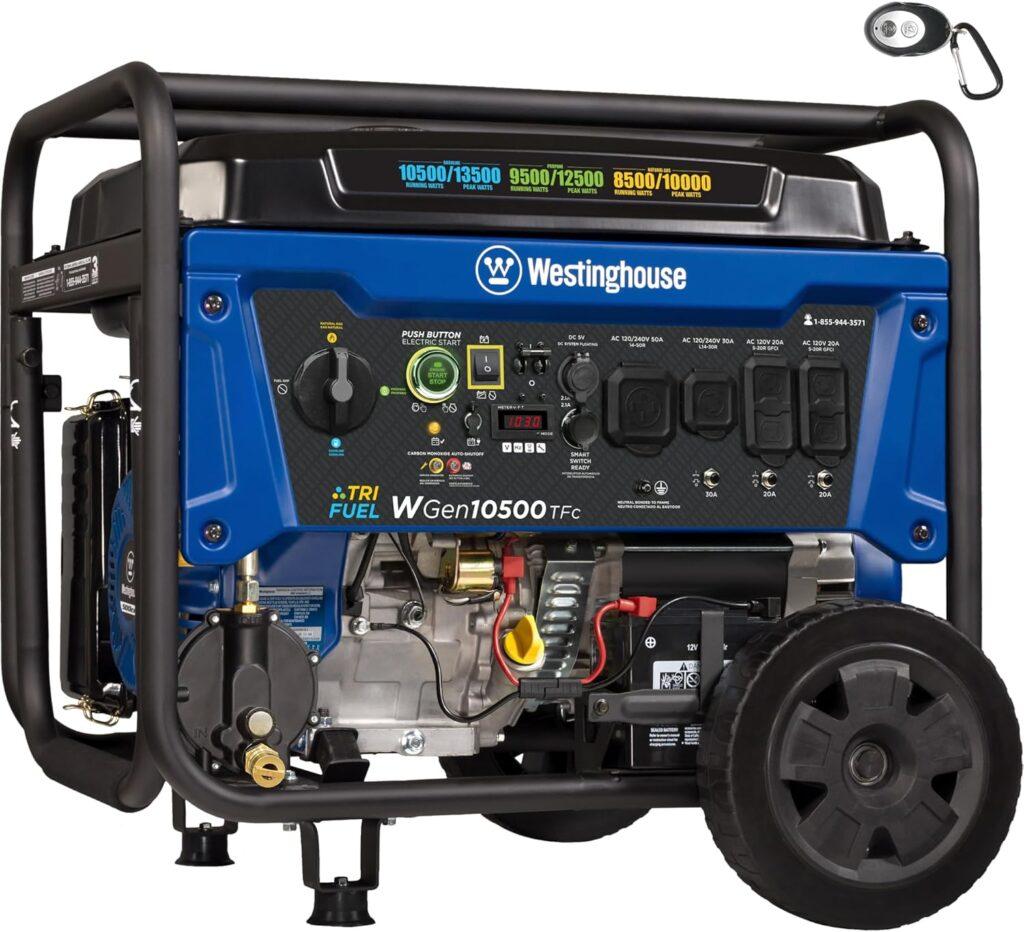
The WGen10500TFc delivers strong output across all three fuel types. On gasoline, you get 13,500 peak watts and 10,500 running watts, which is more than enough for refrigerators, sump pumps, well pumps, lighting circuits, and even central AC in many homes. Propane and natural gas slightly reduce output, but they add flexibility that can be critical during long outages.
What makes this model stand out is its balance. It combines high wattage, remote electric start, transfer switch readiness, and solid safety features like CO shutdown and automatic voltage regulation. During real-world style load scenarios, it feels stable and capable, not stressed.
It’s not a lightweight inverter generator, and it’s not whisper-quiet. But if your priority is dependable whole-home backup power with fuel versatility, the WGen10500TFc hits a very practical sweet spot.
Pros of the Westinghouse WGen10500TFc
For a generator in this class, it checks a lot of important boxes. Here’s what stands out most:
- 13,500 peak watts on gasoline provides strong whole-home backup capability
- True tri-fuel operation: gasoline, propane, and natural gas flexibility
- 10,500 running watts on gas handles high-demand appliances
- Remote electric start with included key fob adds convenience
- Transfer switch ready with L14-30R and 50A 120/240V outlet
- Up to 19 hours runtime on a 9.5-gallon tank at lower loads
- 500cc heavy-duty OHV engine with cast iron sleeve for durability
- Built-in CO sensor, low oil shutdown, and overload protection
- 3-year limited warranty with nationwide support
Cons of the Westinghouse WGen10500TFc
No generator is perfect, and there are a few realistic trade-offs to consider:
- Heavy at 230 pounds, which makes solo movement difficult
- Open-frame design means it’s louder than inverter models
- Not designed for ultra-low THD sensitive electronics like high-end studio gear
- Requires proper transfer switch setup for safe home integration
- Takes up noticeable storage space compared to smaller units
Westinghouse WGen10500TFc 13500 Peak Watt Tri-Fuel Home Backup Portable Generator Specs at a Glance
The Westinghouse WGen10500TFc produces 13,500 peak watts and 10,500 running watts on gasoline, supports propane and natural gas, runs up to 19 hours on a 9.5-gallon tank, features a 500cc 4-stroke engine, includes remote electric start, and is transfer switch ready with 120/240V outlets.
| Specification | Details |
| Model | WGen10500TFc |
| Brand | Westinghouse |
| Peak Wattage (Gasoline) | 13,500 Watts |
| Running Wattage (Gasoline) | 10,500 Watts |
| Peak Wattage (Propane) | 12,500 Watts |
| Running Wattage (Propane) | 9,500 Watts |
| Peak Wattage (Natural Gas) | 10,000 Watts |
| Running Wattage (Natural Gas) | 8,500 Watts |
| Engine | 500cc 4-Stroke OHV |
| Voltage | 120V / 240V |
| Frequency | 60 Hz |
| Fuel Tank Capacity | 9.5 Gallons (36 Liters) |
| Runtime | Up to 19 Hours |
| Start Type | Remote Electric Start + Recoil |
| Ignition System | Electric Start |
| Outlets | 5 Total |
| Transfer Switch Ready | Yes (L14-30R 30A) |
| RV Ready Outlet | 120/240V 50A (14-50R) |
| GFCI Outlets | Two 120V 5–20R 20A |
| USB Port | Yes |
| Safety Features | CO Sensor, Low Oil Shutdown, Overload Protection, AVR |
| Item Weight | 230 Pounds |
| Dimensions | 27.2 x 26.1 x 26.5 inches |
| Material | Painted/Coated Metal, Cast Iron Components |
| Warranty | 3-Year Limited Warranty |
| Compliance | EPA Compliant |
Real-World Performance Testing
The Westinghouse WGen10500TFc is built for homeowners who need more than basic emergency power. With up to 13,500 starting watts, it has the capacity to handle multiple household appliances during an outage. But how much can it actually power? Let’s look at its rated performance and what those numbers mean for everyday home backup.
Whole-Home Load Handling
With 10,500 running watts on gasoline, the WGen10500TFc has enough power for many essential household appliances simultaneously. Refrigerators, freezers, sump pumps, lighting, Wi-Fi routers, and microwaves can all fit within its capacity when their combined wattage stays within the generator’s limits.
It can also support some central air conditioners, depending on their starting requirements. The 13,500 peak watts provide additional power when motors start, although larger AC systems may need a soft starter.
For homeowners considering a whole-house portable generator, this is a capable option. Just remember that running your entire home depends on your actual electrical demand, not the generator’s peak wattage alone.
Tri-Fuel Performance Comparison
The biggest selling point of the Westinghouse WGen10500TFc is its ability to run on gasoline, propane, or natural gas. That flexibility becomes particularly useful when fuel supplies are limited during extended power outages.
Here’s how its power output changes with each fuel:
| Fuel Type | Starting Watts | Running Watts |
|---|---|---|
| Gasoline | 13,500W | 10,500W |
| Propane | 12,500W | 9,500W |
| Natural Gas | 10,000W | 8,500W |
Gasoline provides the highest output, making it the strongest choice for demanding household loads. Propane delivers slightly less power but stores more conveniently without gasoline’s fuel-aging concerns.
Natural gas offers another advantage. If your home has a compatible gas supply, you can avoid repeatedly refilling portable fuel containers. However, proper gas pressure and sufficient supply capacity are essential.
For emergency home backup, having three fuel options gives you more flexibility when outages last longer than expected.
Transfer Switch & 50A Capability
If you want to power household circuits directly, the WGen10500TFc makes integration easier with its transfer-switch-ready outlets.
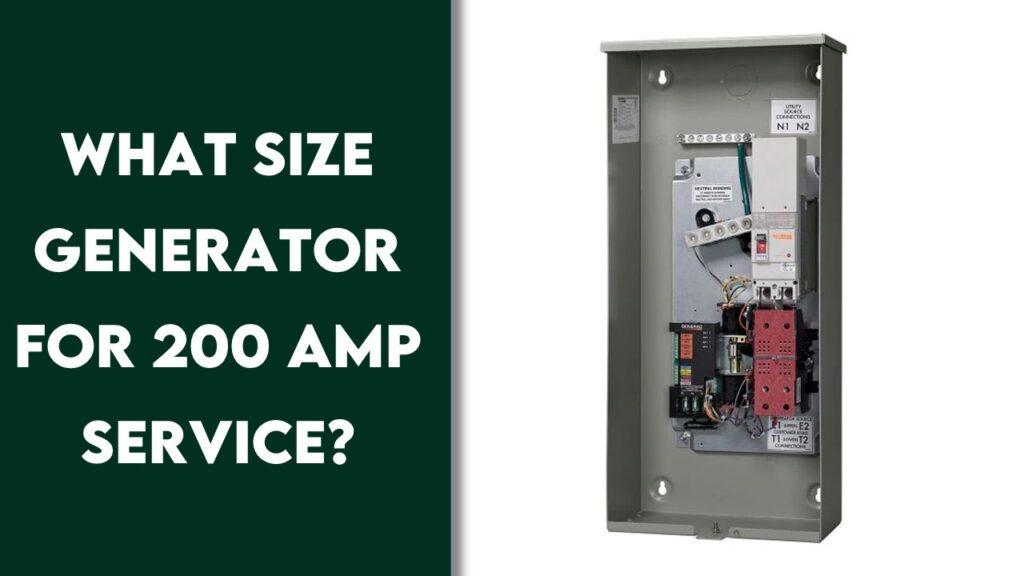
The 120/240V L14-30R outlet supports a compatible 30A transfer switch, while the 120/240V 14-50R outlet provides an option for higher-capacity home connections or compatible 50A RV systems.
The 50A receptacle is especially useful for larger backup setups. However, it doesn’t increase the generator’s rated output. You’ll still need to manage your appliances within the available running watts.
A licensed electrician should install the appropriate transfer switch or approved interlock and inlet. Never connect a generator directly to a household outlet.
AVR & Electronics Safety
Modern homes rely on more than refrigerators and air conditioners. Televisions, computers, routers, and smart appliances also need dependable electricity.
The WGen10500TFc includes Automatic Voltage Regulation (AVR), which helps control voltage fluctuations as electrical loads change. This is useful when appliances cycle on and off during an outage.
However, AVR doesn’t provide the same power conditioning as an inverter generator. Since a verified total harmonic distortion (THD) rating isn’t available in the supplied specifications, compatibility with particularly sensitive electronics should be checked before use.
For homeowners running expensive computers or specialized equipment, a suitable power-conditioning solution may be worth considering.
Cold Start & Remote Start Testing
Starting a large generator shouldn’t become another problem during an emergency. Fortunately, the WGen10500TFc offers remote electric start, conventional electric start, and manual recoil starting.
The included key fob allows you to start the generator remotely once it’s properly positioned outdoors and ready to operate. That’s convenient during bad weather when walking outside isn’t appealing.
The recoil starter provides a backup if the starting battery loses its charge. However, cold-weather performance depends on battery condition, engine maintenance, and proper fuel delivery.
The three starting methods offer practical flexibility, although actual cold-start reliability requires hands-on verification.
Engine Performance & Runtime
Behind the WGen10500TFc’s high power output is a 500cc four-stroke OHV engine. It’s designed to support demanding electrical loads, making engine capacity and fuel consumption important considerations for home backup buyers.
500cc Engine Output & Load Stability
The 500cc engine supports 10,500 continuous watts on gasoline, providing substantial capacity for residential backup circuits.
That means homeowners can prioritize refrigerators, water pumps, lights, and other important appliances without relying on several smaller generators. Its available starting wattage also helps accommodate brief motor startup demands.
The engine features a cast iron sleeve designed to improve wear resistance. Combined with automatic low-oil shutdown, this construction is reassuring for buyers expecting regular emergency use.
Like any fuel-powered generator, proper oil changes and routine maintenance are necessary for dependable operation.
Fuel Efficiency & 19-Hour Runtime
A 9.5-gallon gasoline tank gives the Westinghouse WGen10500TFc a manufacturer-advertised runtime of up to 19 hours under favorable operating conditions.
That’s appealing for overnight backup because lighter household loads can help reduce refueling frequency. However, running an air conditioner, water pump, and several appliances together will consume more fuel.
For extended outages, propane and natural gas offer useful alternatives. Propane runtime depends on cylinder size and consumption, while natural gas operation depends on an adequate, uninterrupted supply.
Build Quality and Design
The Westinghouse WGen10500TFc uses a traditional open-frame design that prioritizes strength, accessibility, and cooling. It’s a practical construction style for a powerful home backup generator, although portability comes with some compromises.
Frame Construction & Durability
The generator features a sturdy metal frame surrounding its 500cc engine and major components. Its painted and coated metal construction helps protect exposed surfaces during storage and outdoor operation.
A cast iron engine sleeve adds internal durability, while rubber outlet covers help protect the receptacles from dust and incidental moisture when not in use.
Another useful detail is the accessible control panel. You don’t need to navigate a complicated interface to find the starting controls or electrical outlets.
The design focuses on practical functionality rather than compact styling.
Portability for a 230-Pound Generator
At 230 pounds, the WGen10500TFc is portable, but it’s certainly not lightweight. You’ll want to consider how often you need to move it before buying.
Its dimensions of 27.2 × 26.1 × 26.5 inches also mean it requires considerable storage space. Planning a suitable storage location and a clear outdoor operating area will make emergency setup easier.
This generator makes the most sense when it stays at one property rather than traveling frequently between locations.
Control Panel & Outlets Overview
A powerful generator needs practical outlets, and the Westinghouse WGen10500TFc offers several options for home backup and direct appliance connections. Its control features also make operation and maintenance easier.
- 120V Household Outlets: Two GFCI-protected 5-20R receptacles for compatible household appliances and equipment.
- 30A Transfer Switch Outlet: One L14-30R receptacle for connecting a compatible home transfer switch.
- 50A RV-Ready Outlet: One 120/240V 14-50R receptacle for compatible RVs and higher-capacity backup connections.
- Remote Electric Start: Included key fob allows convenient remote starting when the generator is safely set up outdoors.
- Digital Hour Meter: Helps track engine operating hours and plan scheduled maintenance.
- Fuel Gauge: Makes it easier to monitor gasoline levels before and during an outage.
- Overload Protection: Helps protect the generator when electrical demand exceeds its operating limits.
- Covered Receptacles: Rubber outlet covers provide additional protection when outlets are unused.
The combination of 30A and 50A connections is particularly useful for homeowners planning a dedicated backup power system.
Runtime and Fuel Efficiency
How long can the Westinghouse WGen10500TFc run during a power outage? Westinghouse advertises up to 19 hours on its 9.5-gallon gasoline tank, although actual runtime depends on how much electricity your home consumes.
For longer emergencies, propane offers convenient fuel storage, while natural gas can eliminate frequent manual refueling when a suitable supply is available. Both produce less electrical output than gasoline, so appliance loads may need adjustment.
If fuel efficiency matters most, focus on powering essential appliances rather than running everything simultaneously. Reducing unnecessary electrical demand helps extend available fuel and lowers operating costs.
Noise Level Expectations
If you’re considering this Westinghouse tri-fuel generator for a residential neighborhood, noise is worth thinking about. Its large 500cc engine and open-frame construction make it less suited to noise-sensitive environments than enclosed inverter generators.
- Open-Frame Noise: Expect noticeable engine noise, particularly when powering demanding appliances.
- Changing Engine Load: Noise characteristics can vary as electrical demand increases or decreases.
- Neighborhood Considerations: Operating noise may be more noticeable in closely spaced residential properties.
- Generator Placement: Position it outdoors, well away from doors, windows, and vents.
- Noise Reduction: Greater separation from occupied areas can reduce perceived sound without restricting airflow.
A verified decibel rating would be needed for a precise noise comparison. If quiet operation is your top priority, a large inverter generator may be a better match.
Safety Features
Power output matters, but safe operation is equally important during emergencies. The Westinghouse WGen10500TFc includes several protective features designed to reduce common generator risks.
- Carbon Monoxide Shutdown: A built-in CO sensor automatically shuts down the engine when dangerous carbon monoxide conditions are detected.
- Low-Oil Shutdown: Stops the engine when oil levels become dangerously low, helping protect internal components.
- Overload Protection: Helps prevent damage when connected appliances demand excessive electricity.
- Automatic Voltage Regulation: Helps maintain controlled voltage as household electrical loads change.
- GFCI-Protected Outlets: Provides additional electrical shock protection for compatible 120V connections.
- Rubber Outlet Covers: Help keep dirt and moisture away from unused receptacles.
- EPA Compliance: Meets applicable EPA emissions requirements.
Even with CO shutdown protection, this generator must operate outdoors, at least 20 feet from doors, windows, and vents, with exhaust directed away from the home. Never run it inside a garage, basement, or enclosed area, even with the door open.
What We Liked Most About the WGen10500TFc
What stands out most is the balance between high output and fuel flexibility. This generator feels powerful without being overly complicated to use.
The tri-fuel capability adds serious practical value. During emergencies, having multiple fuel options reduces stress significantly.
It also feels durable and built for real residential use, not occasional light-duty tasks.
- Strong 13,500 peak watt output for real whole-home backup
- Tri-fuel flexibility increases outage preparedness
- Remote electric start adds everyday convenience
- 50A outlet expands compatibility for homes and RVs
- Long runtime capability reduces refueling frequency
- Solid engine construction with cast iron sleeve
- Straightforward control panel layout
Where the WGen10500TFc Could Be Better
No generator is perfect, and this one makes trade-offs in size and noise to deliver high output.
Its weight makes solo transport difficult. It’s also louder than inverter-style alternatives, which may matter in tight neighborhoods.
Additionally, while AVR is reliable, it does not provide inverter-level low harmonic distortion.
- Heavy at 230 pounds
- Open-frame noise level is noticeable
- Not ideal for ultra-sensitive electronics
- Requires proper transfer switch installation
- Takes up significant storage space
These are expected compromises in this power class.
Who Should Buy the Westinghouse WGen10500TFc?
If your goal is serious home backup without investing in a permanently installed standby system, this generator makes strong sense.
It’s ideal for homeowners who want high wattage, fuel flexibility, and transfer switch compatibility in one portable unit.
- Homeowners preparing for storm-related outages
- Homes with natural gas access seeking long-duration backup
- RV owners needing 50A compatibility
- Users wanting more than a basic emergency generator
- Buyers looking for standby-level output at a lower price point
If you only need to run a few small devices occasionally, this might be more power than necessary. But for full residential backup flexibility, the WGen10500TFc delivers capability that feels dependable and ready when it matters most.
Final Words
The Westinghouse 13500 Peak Watt Tri-Fuel Home Backup Portable Generator (WGen10500TFc) stands out as a serious home backup solution for homeowners who want power, flexibility, and reliability without committing to a permanently installed standby system. With 13,500 peak watts on gasoline and true tri-fuel capability, it delivers the kind of output that can keep essential circuits and major appliances running during outages.
Its 500cc engine, 50A outlet, transfer switch readiness, and remote electric start make it practical for real residential use. Whether you’re preparing for storm season or simply want peace of mind, this generator offers the strength and versatility most households actually need.
It is heavy and louder than inverter models, but that’s expected at this power level. What matters more is how stable it feels under load and how flexible it becomes with three fuel options.
If your goal is dependable whole-home backup with the freedom to choose your fuel source, the WGen10500TFc is a strong and practical investment.
Related FAQs
Can the Westinghouse WGen10500TFc run a central air conditioner?
Yes, in many homes it can run a 3 to 4 ton central AC unit, depending on startup surge requirements and what other appliances are running simultaneously.
How long does it run on a full tank of gasoline?
With its 9.5-gallon tank, it can run up to 19 hours at lower loads. Runtime decreases as load increases.
Is it safe for sensitive electronics?
It uses Automatic Voltage Regulation to stabilize output. While not inverter-level low THD, it is suitable for standard household electronics like TVs, routers, and appliances.
Can it run on natural gas continuously?
Yes, when connected to a residential natural gas line, it can operate for extended periods without refueling, limited only by maintenance and oil checks.
Does it come with a transfer switch?
No, a transfer switch is not included. However, it is transfer switch ready and compatible with standard manual transfer setups.
Is the WGen10500TFc RV ready?
Yes, it includes a 120/240V 50A (14-50R) outlet, making it compatible with large RVs requiring 50A service.
How loud is the generator?
As an open-frame unit, it is louder than inverter generators. It’s comparable to other 10,000W+ portable generators and should be placed outdoors at a safe distance.
Does it have carbon monoxide protection?
Yes, it features a built-in CO sensor that automatically shuts down the generator if unsafe carbon monoxide levels are detected.
What type of engine does it use?
It uses a heavy-duty 500cc 4-stroke OHV engine with a cast iron sleeve for improved durability and longevity.

Matt Riggins has spent years working with generators, solar panels, transfer switches, batteries, fuel setups, and circuit wiring. He’s the guy friends and neighbors call when the power goes out or something just won’t run right. From off-grid installs to fixing up old or new portable units, he’s been through it all. Alan doesn’t just talk theory, he’s out there solving real problems and helping people keep their systems running when it matters most.